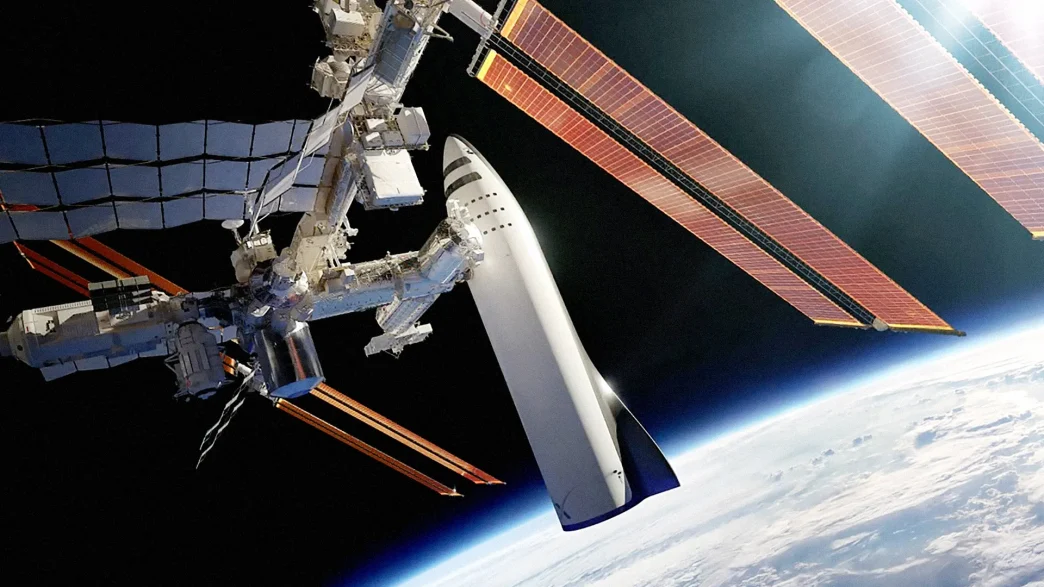
On June 23, 2026, a demonstration mission named Starfall took to the skies, signaling a potential shift in how goods might traverse the globe. This SpaceX initiative, detailed in Federal Aviation Administration documents, is not merely an exercise in spaceflight; it outlines a dual purpose: rapid point-to-point cargo delivery across Earth and the transport of payloads to and from orbital space. The latter could unlock new possibilities for in-space manufacturing, leveraging the unique conditions of microgravity and vacuum.
While the notion of high-speed global transport is not entirely new—the Concorde, a supersonic passenger aircraft, pursued similar objectives decades ago—SpaceX’s approach introduces a fundamentally different paradigm. Unlike the Concorde, which catered to commercial airlines and passenger travel, the proposed rocket-based delivery system is positioned to serve governmental and defense sectors, where speed can be a critical advantage. This distinction in customer base highlights a strategic pivot, focusing on urgent logistical needs rather than broad commercial passenger appeal.
This isn’t about replacing the established arteries of global trade, such as sea shipping or conventional air freight. Instead, orbital cargo transport aims to carve out a niche for ultrafast emergency logistics. Imagine critical medical supplies reaching a disaster zone within hours, or urgent defense components arriving precisely when needed. The system would offer an unparalleled speed, creating a new tier of transport for time-sensitive, high-value goods that current methods simply cannot match.
Beyond Earth-bound rapid transit, SpaceX’s vision extends into the burgeoning field of in-space manufacturing. The Starfall concept suggests a future where rockets not only shuttle goods between terrestrial points but also ferry materials and finished products to and from orbital facilities. The microgravity and vacuum environments of space offer unique conditions for developing specialized pharmaceuticals, advanced electronics, or novel materials—conditions that are difficult, if not impossible, to replicate economically on Earth. This capability could foster entirely new markets and research avenues, moving beyond the current model of simply resupplying the International Space Station, which operates on long-term, predictable schedules.
However, the path to realizing this ambitious vision is fraught with significant engineering and logistical hurdles. Rockets, by their very nature, subject cargo to extreme forces. During ascent and reentry, payloads experience severe vibrations and high G-forces, a stark contrast to the relatively gentle ride of traditional air or ocean transport. This means delicate electronics, precision calibration tools, or volatile medical supplies would require specialized packaging, robust qualification, or sophisticated shock-absorbing casings to withstand the journey. The challenge isn’t just building a reliable rocket; it’s designing an entire ecosystem that can manage the integrity of diverse cargo under such conditions.
SpaceX has already demonstrated its ability to innovate in the launch vehicle sector, particularly with its reusable rocket technology, which has significantly driven down launch costs. Yet, operating a comprehensive global cargo network involves far more than just launching rockets. Critical early decisions will shape the success of the entire endeavor, including the strategic placement of launch and landing sites, efficient methods for loading and unloading orbital payloads onto existing ground transportation, and the sheer scale of rocket production required to meet demand. Integrating this high-speed system seamlessly into existing logistics networks is paramount; otherwise, the time saved in orbit could be lost in ground transfers to and from remote launchpads.
Despite these considerable technical and logistical challenges, experts across industry and academia are actively engaged in finding solutions. The current trajectory suggests that overcoming these obstacles may be more a matter of time and concerted effort than an insurmountable barrier. If engineers can meticulously plan and address these complexities from the outset, orbital cargo transport could indeed usher in a transformative chapter for both global transportation and the burgeoning space economy, fundamentally altering how we perceive and execute rapid delivery on an unprecedented scale.