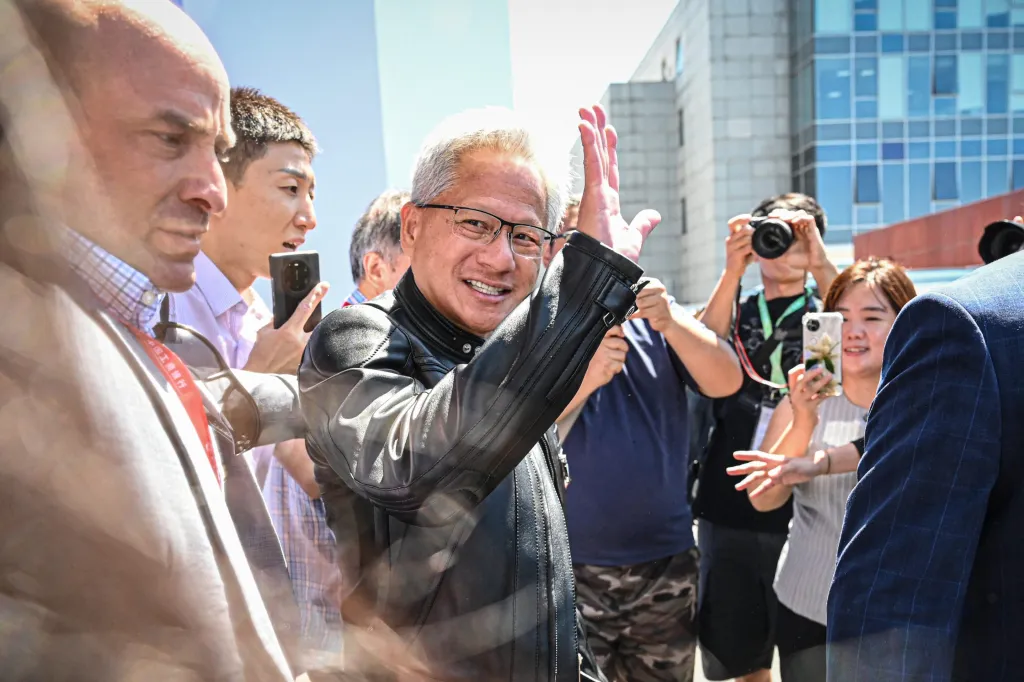
Nvidia, the chipmaking titan, is orchestrating a significant financial maneuver, engaging some of the world’s largest investment firms to funnel capital into artificial intelligence infrastructure. This week, the company announced partnerships with an impressive roster of financial heavyweights, including Apollo, BlackRock, Blackstone, Brookfield, Goldman Sachs, and KKR. Their collective aim is to mobilize over $500 billion to build out the physical backbone for AI, a move that signals a profound shift in how this transformative technology is being financed. Rather than relying solely on its own balance sheet, Nvidia is positioning AI compute as a robust, financeable asset class, largely drawing on capital from third-party investors.
Jensen Huang, Nvidia’s CEO, framed this initiative as treating AI compute as “productive infrastructure,” a designation typically reserved for assets like roads, bridges, or utilities. To sweeten the deal for potential investors, Nvidia is even offering residual-value support, covering up to 25% on some of these deals. This commitment underscores the company’s confidence in the long-term value and essential nature of AI hardware. The financial community has largely responded positively to this innovative approach, with analysts from Morgan Stanley and Bank of America highlighting the unusual financeability of Nvidia’s chips. However, not everyone is entirely convinced; Ben Thompson of Stratechery voiced a degree of caution, describing it as a “completely new nerve-racking thing to bring safety-seeking assets to bear” on what is essentially a massive pile of GPUs.
This push for external funding occurs against a backdrop of intense activity in the AI sector and broader technology landscape. While Nvidia seeks to underwrite the future of AI infrastructure, other major players are navigating their own strategic shifts. Apple, for instance, recently brought Nate Gatten, a seasoned government affairs executive with Republican ties and experience at American Airlines, JPMorgan, and Fannie Mae, into its leadership ranks as vice president of government affairs. Reporting directly to Tim Cook, Gatten’s appointment comes just weeks before Cook is set to hand the CEO reins to hardware chief John Ternus in September, transitioning to an executive chairman role where he is also expected to engage with Washington D.C. circles. This hire suggests a potential alignment with the current administration, indicating Apple’s strategic focus on government relations as it navigates an increasingly complex regulatory environment.
Meanwhile, the race in generative AI continues to intensify, particularly within Google’s DeepMind division. Sergey Brin has reportedly been personally pushing DeepMind staff to accelerate their work on Gemini, Google’s next flagship AI model. This increased urgency follows Anthropic’s advancements with its Claude Mythos preview, which seemingly pulled ahead of Google. Internal testing allegedly revealed that Gemini’s coding capabilities lagged behind rivals, leading to a reported two-month delay. The pressure culminated in a recent shakeup where day-to-day authority for DeepMind was transferred from its chief, Demis Hassabis, to his deputy, Koray Kavukcuoglu. Kavukcuoglu now holds final say on major decisions and reports directly to CEO Sundar Pichai, a move that further diminishes DeepMind’s independence since its acquisition by Google in 2014. This shift has also seen some teams integrated into corporate Google, and notable talent, including Gemini’s original co-leads Jeff Dean and Oriol Vinyals, have departed.
Beyond these high-profile movements, the technology sector buzzes with diverse developments. Vibe-coding startup Lovable recently secured $400 million, valuing it at $13.3 billion, more than double its December valuation. DeepSeek is quietly expanding its team, posting job listings for a new AI-agent division, aiming to challenge Anthropic’s Claude Code. Google is also pushing into health tech with new wearables designed to track insulin resistance, a first in the market using AI and sensor data without continuous glucose monitoring. Uber is reportedly developing a “tween” rides option for children aged 10 to 12, based on code found in its latest iOS app. The burgeoning prediction-markets industry faces scrutiny, with New York City investigating Polymarket, Kalshi, Coinbase, and Titan over their advertising practices. Grubhub is finally distributing $23.8 million in an FTC settlement to over 640,000 diners and drivers, addressing misleading earnings claims and phantom restaurant listings. Even Uber Freight is contending with a data breach claim from hacking group Helix, which alleges it stole dispatch records and accounts payable files. And in a telling anecdote, Sam Altman, the founder of OpenAI, reflected on turning down a Goldman Sachs internship, an offer he now finds “unbelievably terrible,” despite OpenAI itself having recruited over 100 former bankers.