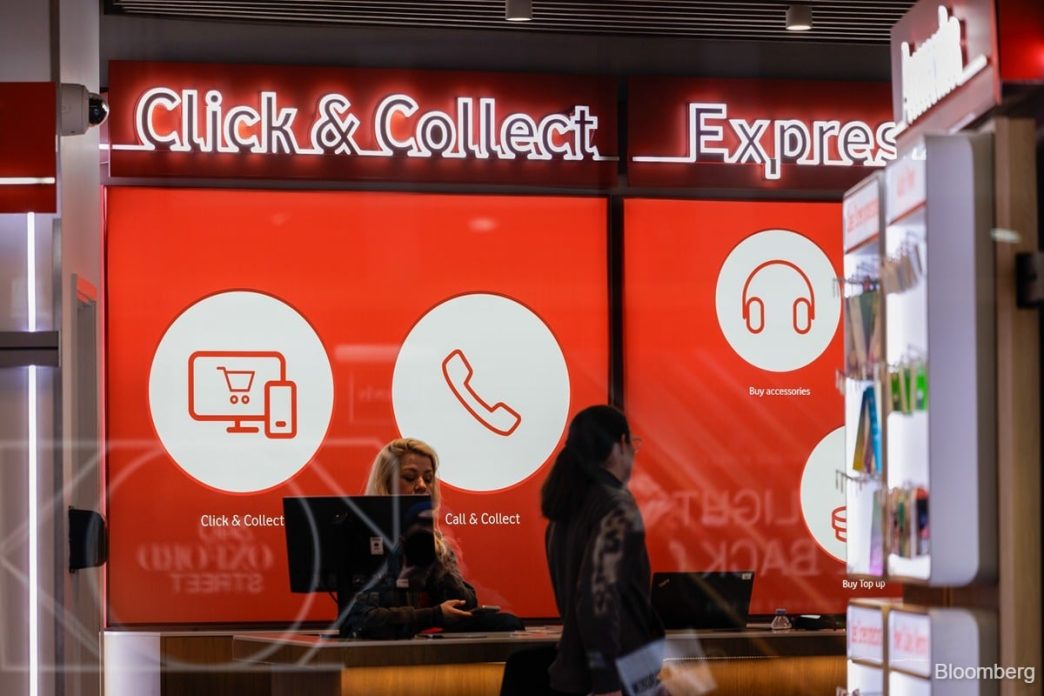
Vodafone Group Plc raised its full-year profit outlook on Tuesday, giving investors a sign that Chief Executive Officer Margherita Della Valle’s cost-cutting campaign is starting to deliver. The British phone company now expects earnings before interest, taxes, depreciation and amortization after leases to reach between €13.2 billion and €13.4 billion for the fiscal year ending in March, up from a previous range of €13 billion to €13.3 billion.
The improved guidance follows a sharp reduction in expenses. Vodafone cut more than 3,000 jobs across Europe in the first half of the year and has been selling assets, streamlining operations and pressing for savings across its largest markets. The company said it delivered €700 million in annual gross savings between 2023 and 2026 through staff reductions and other measures.
Where the growth is coming from
Most of Vodafone’s growth is now coming from less saturated markets in Africa and the Middle East, where rising demand for mobile data and financial services is pushing revenue higher. Those regions have become the bright spots in a portfolio that still depends heavily on competitive and regulated European markets.
In Europe, the company is trying to offset price pressure and slowing subscriber growth with cost discipline. It expects to reduce European operating expenditures by more than €200 million in the 2027 fiscal year and has announced 2,300 role reductions in Germany, one of its most important but most challenged markets.
German market recovery
Vodafone’s German business has been recovering from a 2024 law change that barred landlords from bundling rent with TV and broadband services. The change cost the company millions of customers and forced it to rethink how it packages and sells services. Vodafone is now using broadband and mobile bundles to differentiate itself from some competitors and win back market position.
Germany remains a priority because of its size and the company’s historical strength there. The job cuts and operating-expense reductions are partly aimed at making the German unit leaner while it adapts to the new regulatory environment.
UK merger adds scale
In the United Kingdom, Vodafone combined with CK Hutchison Holdings Ltd’s Three business, reducing the number of large mobile operators from four to three. Vodafone took full control of the merged venture earlier this year and said the combination would save £1 billion annually by 2032 through shutting overlapping sites, consolidating networks and running a single operation more efficiently.
The merger gives Vodafone the scale it lacked in its home market and creates a stronger competitor to BT's EE and Virgin Media O2. Investors have welcomed the deal, which is central to Della Valle's argument that Vodafone can compete more effectively as a larger, simpler company.
Investor reaction
Vodafone's shares closed at 116.95 pence on Monday and have gained 18% this year. The raised guidance suggests management is gaining confidence that the turnaround plan is working, even as revenue growth in Europe remains muted.
The test now is whether Vodafone can keep cutting costs without damaging service quality or losing customers to rivals. Telecom is a capital-intensive industry where network investment cannot be deferred forever, and the company still faces heavy spending demands for 5G, fiber and IT modernization.
What comes next
Della Valle has made it clear that her strategy rests on three pillars: simplifying the portfolio, cutting costs and focusing on markets where Vodafone can lead. The raised forecast is a small but important validation of that approach.
Still, the broader European telecom sector remains tough. Prices are under pressure, regulators are demanding more investment, and competition is intense. Vodafone's ability to hit the upper end of its new guidance will depend on whether the cost savings translate into sustainable profitability, not just a one-off boost.