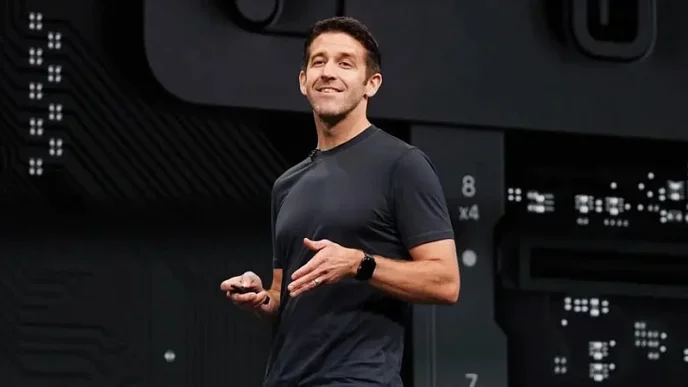
Kevin Lamour, FIFA’s chief operating officer, has officially departed from his role, less than three weeks after he publicly condemned President Gianni Infantino’s initiative to introduce private investment into the organization’s major competitions. His exit, confirmed by FIFA, took effect on August 17, though the reasons for his departure remain officially undisclosed. Media speculation, however, quickly surfaced suggesting a termination of his employment.
A FIFA spokesperson, when contacted by AFP, acknowledged the end of the working relationship, stating, “FIFA thanks Kevin for his two years of service and wishes him the best of luck for the future.” Lamour had been a significant figure within FIFA’s senior executive team since his arrival from UEFA in November 2024. His extensive portfolio encompassed critical areas including finance, legal and compliance, communications, member associations, technology, operations, and social responsibility, spanning FIFA’s various offices in Zurich, Paris, and Miami.
The catalyst for this high-profile departure appears to be Lamour’s vocal opposition to the proposed FIFA Forward Enterprise (FFE). This ambitious commercial subsidiary, envisioned to be valued at approximately $20 billion (€17bn), was designed to manage FIFA’s marquee tournaments, including the World Cup, and would have allowed private investors to acquire a 20% stake. Lamour did not mince words when he publicly accused FIFA’s administration of having been “deceived” in the development of this proposal, characterizing FFE as “the project of one person.” In a statement issued on July 31, he declared, “Not only must this project not go ahead… but the time has now come for football political leaders to ask themselves the right questions and make the right decisions.” He concluded with a poignant remark that foreshadowed his current situation: “If that means I lose my job, then so be it.”
Lamour’s exit is not an isolated incident within FIFA’s recent executive movements. It follows the resignation of Infantino’s senior adviser, Carlos Cordeiro, just last month. Cordeiro, a former US Soccer president and Goldman Sachs executive, also expressed significant concerns regarding the FFE proposal. He explicitly stated his non-involvement in its development and labeled it “a bad deal for football.” Cordeiro’s criticism centered on the fundamental question of why FIFA, an organization with substantial financial reserves and no debt, would need to solicit billions from external investors.
The widespread opposition that greeted the FFE proposal ultimately led Infantino to abandon the plan. Three influential regional football governing bodies – UEFA (Europe), CONCACAF (North and Central America and Caribbean), and the AFC (Asia) – had collectively voiced strong objections, deeming the plan a “fundamental breach of trust” with the very institutions FIFA was established to serve. In the wake of these events, FIFA released a statement on August 8, asserting, “It is increasingly evident that there is a concerted and ongoing effort by some to undermine FIFA and its President.” This statement underscored a period of internal and external tension surrounding the leadership and strategic direction of global football’s governing body. The departure of key executives like Lamour and Cordeiro underscores the deep divisions that emerged over the FFE initiative and the broader implications for FIFA’s governance and future commercial strategies.