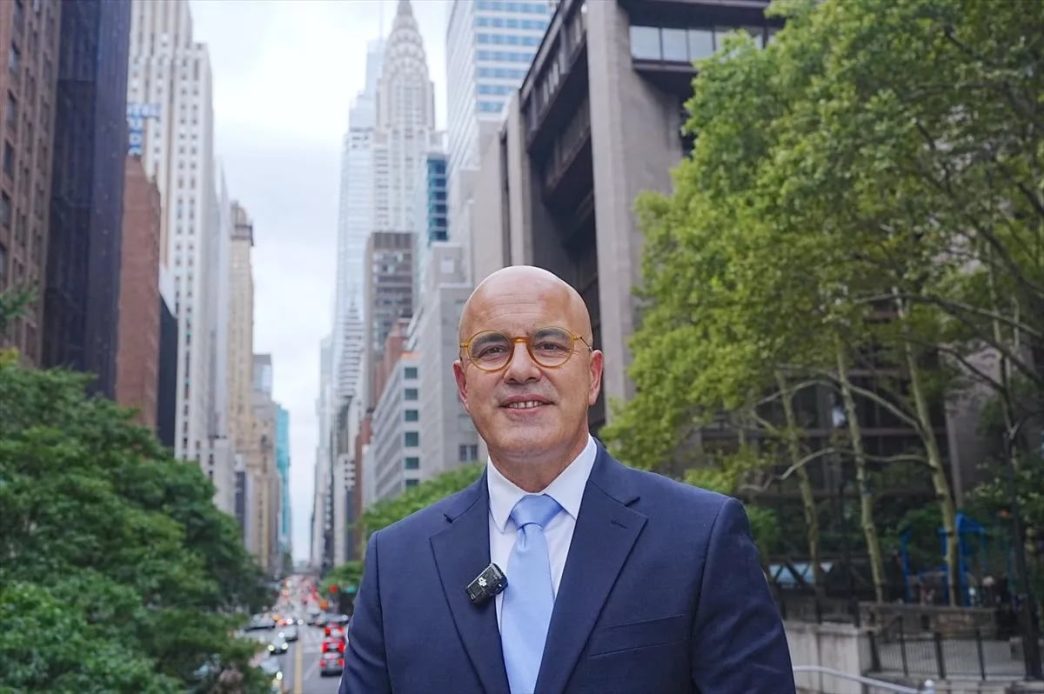
Sabanci Holding Chief Executive Kivanc Zaimler believes the global electrification agenda being advanced at COP31 in Antalya is more than a climate target. Speaking to Bloomberg HT on the sidelines of the summit, he called it an economic transformation program that could reshape Turkey’s industrial competitiveness and energy security.
Turkey is co-hosting the UN Climate Change Conference with Australia from November 9 to 20, and the presidency has put electrification at the center of the agenda. The so-called 35-by-35 goal seeks to raise electricity’s share of global final energy demand from just over 20% today to 35% by 2035. For Zaimler, that target is both an opportunity and a warning for Turkey.
From awareness to implementation
Zaimler said the era of climate summits producing only awareness is over. “COP must now move from awareness to implementation,” he said. He described the outcomes at COP31 as aligned with Turkey’s own roadmap and as proof that the country can complete the transition.
The 21st century, he argued, is the age of electrification. Turkey is heavily dependent on oil imports, so shifting more of the economy onto electricity could reduce that vulnerability. Yet he cautioned that if Turkey cannot build its own electrification equipment and technology, it will simply trade one dependency for another.
A chance to become a clean-energy hub
Turkey’s geographic position and renewable resources give it a natural advantage. Zaimler pointed to the country’s solar and wind potential, industrial infrastructure, private sector, financial system, and human capital as the ingredients needed to turn electrification into an economic model rather than just a cost.
“Turkey has long been talked about as a transit point for oil and natural gas pipelines,” he said. “With electrification, Turkey is becoming a center where clean electrons are produced and sent toward Europe through transmission lines.” That shift, he added, is a serious opportunity for competitiveness, industrial transformation, and technology development.
Financing must be fair and predictable
The transition will not happen without money. Zaimler stressed that financing needs to flow to developing countries on fair terms and that regulations must be predictable enough to encourage long-term investment. He noted that developed and emerging economies start from different positions, so a one-size-fits-all policy will not work.
He also highlighted the energy trilemma: the need to keep energy accessible, affordable, and sustainable at the same time. Electrification, he said, is the equation that can solve all three, but only if supply, demand, and the grids that connect them are upgraded together.
Sabanci's integrated role
Sabanci, Turkey's official electrification partner for COP31, is positioning itself as more than a sponsor. Zaimler said the group is an investor, policy participant, and practitioner across the value chain. Through subsidiaries such as Enerjisa, Esarj, Temsa, Cimsa, Brisa, Kordsa, and Akbank, Sabanci is involved in clean power generation, distribution, electric charging, electric buses, industrial electrification, financing, and insurance.
The group also supports research through Istanbul International Center for Energy and Climate, or IICEC, and its own university. "We are a community that really implements electrification," Zaimler said. "So there is nothing more natural than being the electrification partner this year."
Sector-by-sector roadmaps
Zaimler said the path to 35% electrification will differ by sector. Transport, buildings, and industry each need tailored solutions, and even within industry, steel and cement face different technical challenges than textiles or automotive parts. Sector-specific roadmaps, aligned financing, and coordinated regulation are therefore essential.
He added that rising electricity demand from artificial intelligence data centers makes the challenge more urgent. The world needs more clean power, more efficient grids, and more electric end uses at the same time.
What comes next
For Turkey, Zaimler said the question is whether the electrification push will make rich countries richer and poor countries poorer, or whether it can be managed fairly. If Turkey can combine clean electricity generation, grid investment, human capital, and technology, he sees electrification as one of the country's biggest opportunities.
The COP31 presidency now has to turn the 35-by-35 pledge into concrete commitments from nearly 200 countries. For Turkish business, the summit is a chance to show that the energy transition can be an industrial strategy, not just an environmental obligation.