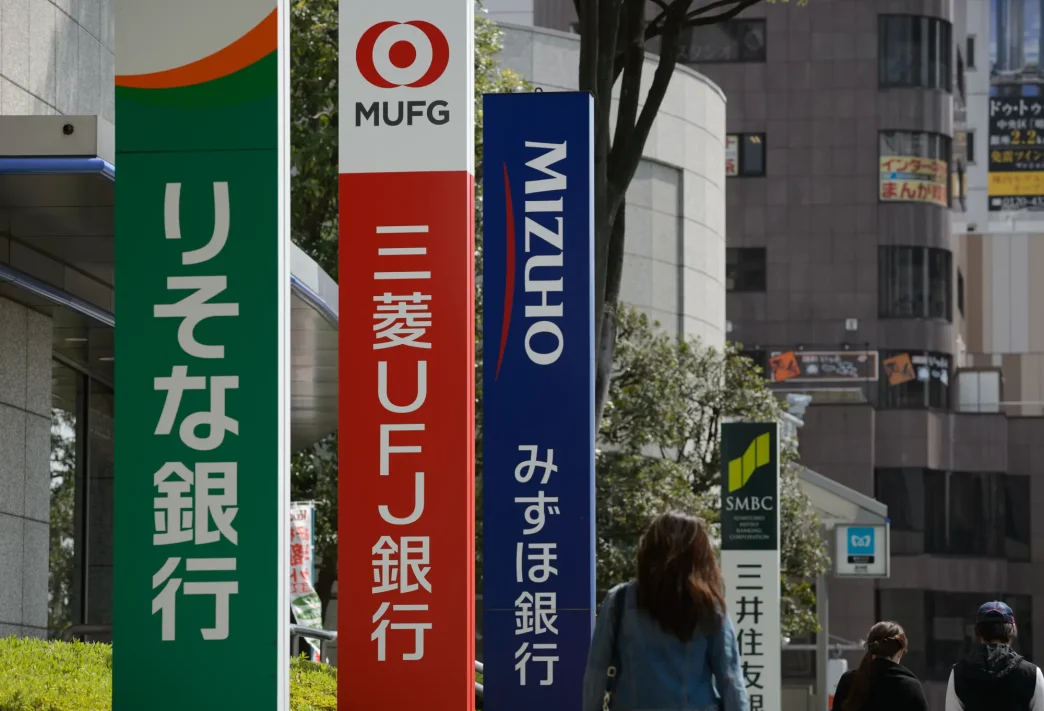
Japan’s three largest banking groups believe the next battle for currency influence will be fought in software, not central bank boardrooms. They are preparing to launch a jointly issued yen-backed stablecoin as early as March, aiming to give international businesses a practical way to settle invoices and move value in Japan’s currency.
The project, led by Mitsubishi UFJ Financial Group, Sumitomo Mitsui Financial Group and Mizuho Financial Group, represents one of the most concrete efforts by a major economy to put its national currency on a blockchain at scale. The lenders argue that making the yen programmable could help it compete in a world where more commerce is mediated by code.
From regulation to real usage
Japan was the first G7 nation to pass a comprehensive stablecoin law, putting guardrails around issuance and reserves well before most peers. That early clarity has not yet translated into widespread adoption. Yen-pegged stablecoins remain a small sliver of a market dominated by U.S. dollar tokens, which account for more than 97% of circulating stablecoin value.
Tomoya Hasebe, global head of digital and innovation at Sumitomo Mitsui Banking Corporation, framed the challenge in technological terms at a roundtable in Singapore on Nov. 16. “The currency competition is now a software competition,” he said. “Currency dominance is increasingly determined not only by central bank policy or regulatory policy, but by which currency is easiest to use as code.”
A regional momentum
Japan is not alone in seeing stablecoins as a path to greater currency independence. Hong Kong issued its first two Hong Kong dollar-backed stablecoin licenses in April, handing them to HSBC and Anchorpoint Financial, a venture that includes Standard Chartered, telecom firm HKT and Web3 company Animoca Brands.
Tim Way, senior director of global banking at digital asset infrastructure firm Fireblocks, said demand is building among companies that want alternatives to the U.S. dollar for trade. “The majority of global trade is still in USD, but there is certainly a group of firms around the world that want to not use U.S. dollars for trade,” he said. “It is an opportunity for Asia to stand up and have more trade in Asia running in Asian currencies.”
Startups enter the fray
Established banks are not the only ones chasing the opportunity. JPYC, a Japanese startup, launched the country's first yen-pegged stablecoin in October 2025. Makoto Shibata, head of Japanese fintech accelerator Finolab, noted that more private enterprises and start-ups are entering the stablecoin space.
Yet newcomers face the same structural headwinds as incumbents. Unlike dollar stablecoins, which can earn meaningful returns by holding U.S. Treasury bills, yen-pegged tokens operate on thin margins because Japanese interest rates have been near zero for years. JPYC has already encountered growth bottlenecks, with users frequently redeeming tokens for traditional yen rather than holding them.
What comes next
The megabank stablecoin is scheduled to begin transactions in March, assuming regulatory approvals and technical preparations stay on track. If it gains traction, it could become a template for how other advanced economies use private-sector stablecoins to extend the reach of their currencies.
Whether that is enough to loosen the dollar's grip on global trade remains doubtful in the near term. But Japan's bet is clear: in a digital economy, the currency that wins may be the one that moves fastest across networks.