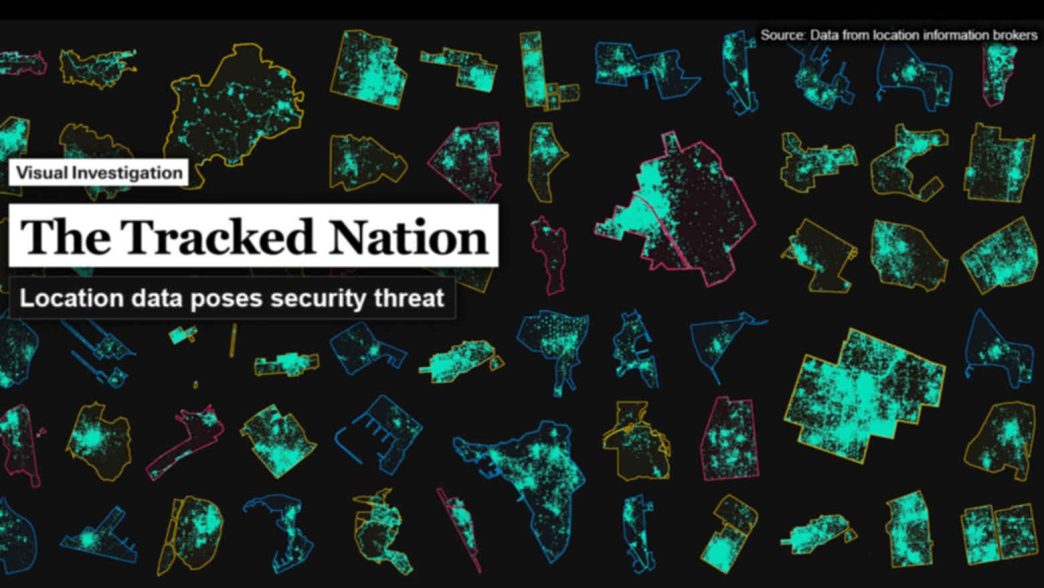
Smartphone location data sold on the open market is exposing sensitive sites across Japan, including bases used by the country’s Ground, Maritime and Air Self-Defense Forces. An analysis of commercially available records shows that the movements of individuals inside these facilities can be traced with enough precision to reveal patterns involving whole defense units.
The findings raise fresh concerns about how easily consumer data can become a national security risk. Japan is not the only country facing this problem, but the density of military installations and government offices in and around its major cities makes the issue especially acute.
From consumer tracking to military exposure
Location brokers collect signals from mobile apps and devices, then package and sell them to advertisers, researchers and other buyers. The records are usually described as anonymized, but the underlying coordinates can be accurate enough to identify specific buildings, entrances and perimeters.
Nikkei analyzed a dataset covering more than 40 million smartphone IDs. The records included visits to high-security locations, among them facilities belonging to Japan’s Self-Defense Forces. In some cases, the data showed repeated movements around bases over time, making it possible to infer schedules, training patterns and the concentration of personnel.
Government sites are in the data too
The problem extends beyond military bases. Location signals were also tied to visits to sensitive government buildings, including the prime minister’s office. If foreign intelligence services or other actors were to purchase the same data, they could build a detailed picture of who enters key facilities, when and how often.
Unlike classified surveillance networks, this information is available legally through the consumer data market. That makes it harder for security agencies to monitor or restrict, and it puts much of the responsibility on app developers, data brokers and device makers to police themselves.
Japan's growing defense profile adds urgency
Tokyo is spending more on defense and deepening military cooperation with allies such as the United States and Australia. As Japan's armed forces become more active, the amount of location data generated around their bases is likely to grow, along with the risk that commercially available signals will reveal operational habits.
Security experts say the answer is not simply to ban smartphones near military sites, since service members and civilian staff live in the same cities and use the same apps as everyone else. Instead, governments may need stricter rules on how location data is collected, stored and sold, plus closer coordination with allies on data protection standards.
A gap in the modern security perimeter
The case highlights how a country's security perimeter no longer ends at the gates of a base. It now includes the apps on phones carried inside, the servers where location histories are stored, and the brokers that sell them. For defense planners, that means a new class of vulnerabilities to manage, even as they prepare for more traditional threats.