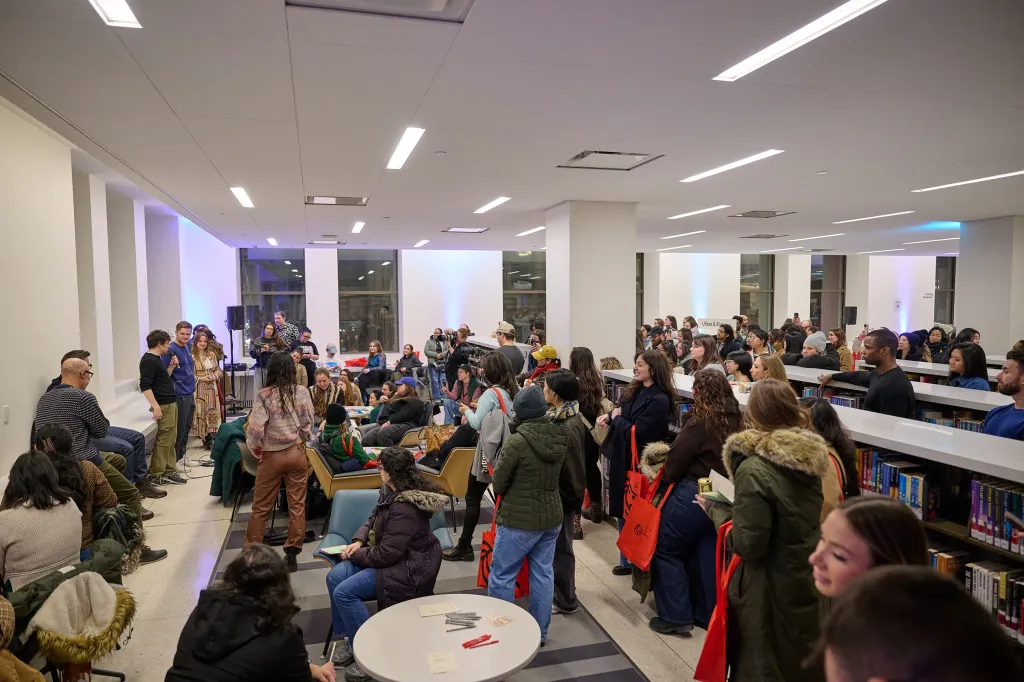
The numbers are staggering. On one of New York’s coldest nights, hundreds queued outside the New York Public Library, not for a celebrity appearance or a product launch, but to participate in a silent reading event. The premise was simple: read for twenty minutes, then discuss your book with a stranger. The library reached capacity, turning people away, a scene that might once have been reserved for a sneaker drop, as Brian Bannon, the New York Public Library’s chief librarian, observed. This burgeoning interest in shared, contemplative spaces suggests a significant societal shift.
For years, coffee shops offered work environments and bars facilitated social interaction, but a growing demand for communal intellectual engagement is now reshaping urban landscapes. The New York Public Library has seen tangible evidence of this trend. Branch library program attendance increased by 10% in fiscal 2026 compared to the previous year, with research library attendance rising 6%. Overall visits climbed by 2% and 4% respectively across all age groups. Teen programming, encompassing book clubs, chess clubs, writing workshops, and technology courses utilizing 3D printers, shows even more rapid growth. Teen program attendance has surged by 27% since fiscal 2023, reaching 146,000 last year, following double-digit increases in the preceding two years. Total teen visits to the library, a separate metric, exceeded 400,000 in fiscal 2025. Bannon suggests that when an environment for collective engagement is provided, people readily embrace it.
This evolution is not accidental. Approximately fifteen years ago, libraries nationwide began re-evaluating their services for teenagers, a demographic often overlooked between children’s and adult programs. The New York Public Library responded by creating dedicated teen spaces equipped with recording studios, 3D printers, and graphic novel collections. These spaces are staffed by teen mentors who actively design programs. Bannon recounted an instance in a Harlem branch where he observed two boys engrossed in a chess match, a strategy book open beside them, while another group conducted a photo shoot for LinkedIn headshots, and a third tinkered with a robotics kit. The shared interest, Bannon believes, is a powerful driver of connection. He points out that at a reading party, the book itself becomes the natural starting point for conversation, lowering social barriers by allowing individuals to connect over genuine curiosity rather than perceived social obligations. Chess, he notes, functions similarly, facilitating social interaction without the pressure of conventional socializing.
This phenomenon extends beyond libraries. Simone Robert and Isabel Münter, founders of Pawn Chess Club, sought to create a more relaxed environment for playing chess than the competitive clubs they found intimidating. Starting in May 2023 in a friend’s restaurant’s private dining room, their club now attracts over 100 people to weeknight events, with roughly half attending alone. Pawn Chess Club aims to provide curated experiences that encourage intentional interaction, whether with friends or strangers, countering the city’s inherent speed and distractions. The club has even partnered with Hinge, supporting its “One More Hour” initiative to foster offline connections, a response to reports of increasing loneliness among younger generations. Robert and Münter have witnessed friendships form, first dates unfold, and strangers become regulars, noting that many attendees report feeling better after an event, ending their day on a positive note.
Neither the Pawn Chess Club founders nor Bannon view this trend as distinct from changing drinking habits among young people. Münter and Robert suggest Pawn’s low-key atmosphere appeals because there’s no pressure to drink or stay out late, an observation Bannon echoes as a hypothesis. Münter believes people are simply craving in-person, offline interactions. This August, Pawn will host a chess evening in the garden of the Noguchi Museum in Astoria, coinciding with an exhibition of sculptor Isamu Noguchi’s chess set, part of an effort to bridge chess with the art world. Similarly, Maura Cheeks opened Liz’s Book Bar in Brooklyn with the intention of creating a neighborhood hub for learning and connection, not just another bookstore. Since June 2024, she has seen customers become friends, regulars build community, and even romantic relationships blossom. Cheeks notes a diverse age range among her patrons, which she partly attributes to the neighborhood.
Cal Newport, author of *Digital Minimalism*, interprets this shift as a reaction against an internet increasingly designed to capture rather than enrich attention. He argues that simply reducing device usage is ineffective; instead, a compelling analog life must be cultivated to overshadow digital distractions. Newport attributes this to several factors: social apps mimicking TikTok’s algorithmic model at the expense of genuine networking, a public disillusionment with Silicon Valley leadership post-Steve Jobs, and a perceived “joyless and often unnerving” AI boom with little tangible benefit for most daily lives. He concludes that many are simply “done with all of this.” This sentiment may explain the long lines for silent reading parties, the rising library attendance, and the popularity of chess clubs in various venues. While technology promised effortless entertainment and limitless information, many young adults now appear to be seeking something more profound: a reason to engage physically, meet new people, and think collaboratively. As Bannon aptly puts it, amidst widespread societal criticism, it is important to acknowledge and discuss what is genuinely working.