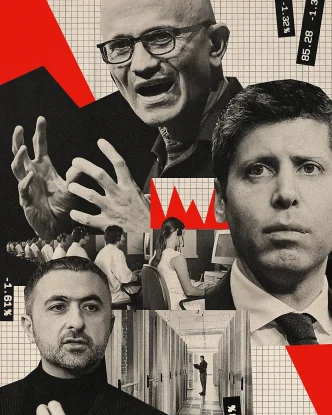
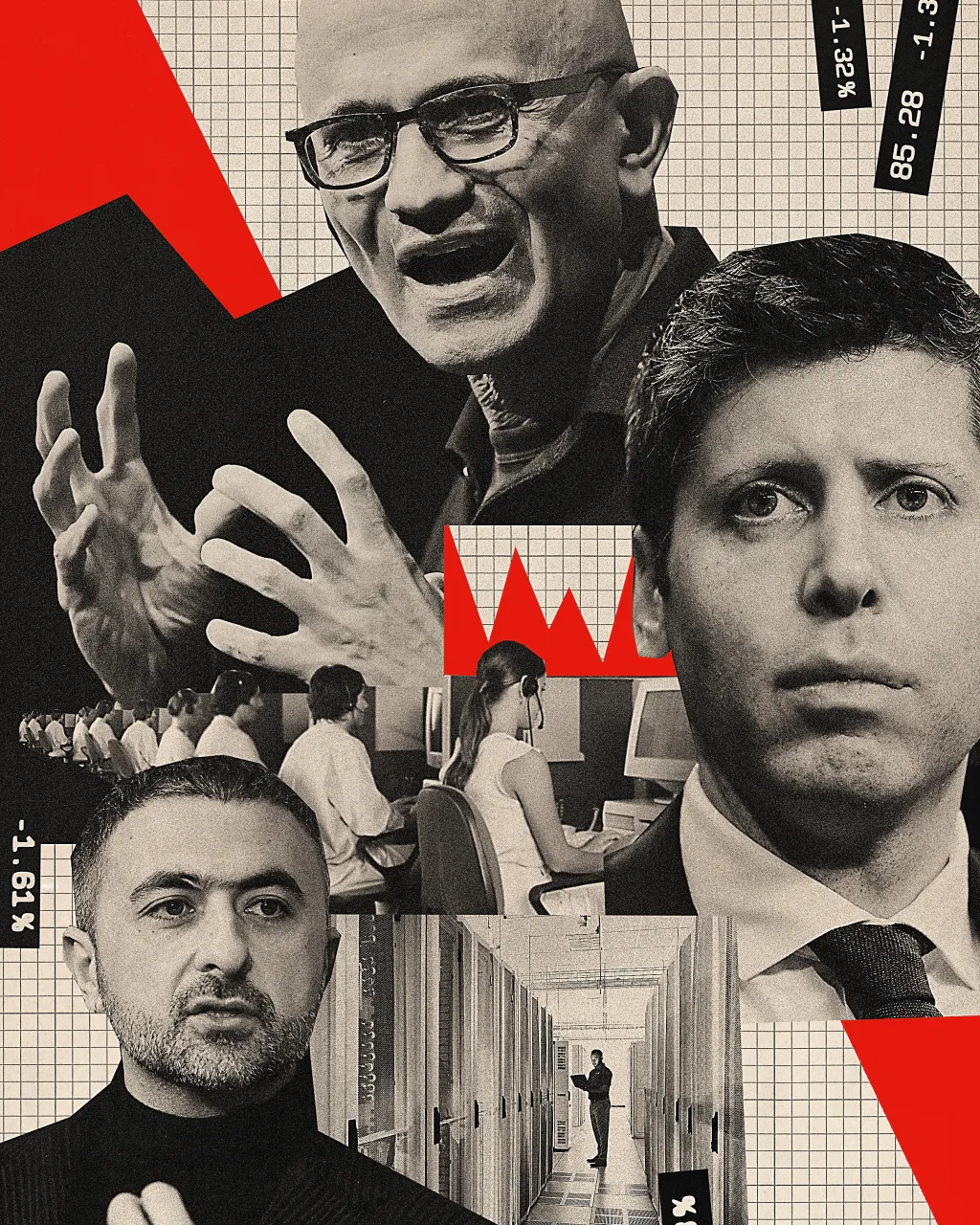
The winter chill in Redmond, Washington, barely registered for the Microsoft engineers huddled in Building 92 in mid-January 2026. Their mission, a new AI personal assistant, was behind schedule, and the competitive landscape was intensifying. Satya Nadella, Microsoft’s CEO, arrived to demonstrate “Chain of Debate,” his self-built application for controlling multiple AI agents. This hands-on display from Nadella, who had coded the prototype himself using an AI tool, underscored the urgency and inspired the team, according to Jacob Andreou, Executive Vice President for Copilot design. The company’s subsequent push culminated in the late February launch of Copilot Tasks, a computer-using personal assistant AI. Nadella’s direct involvement, a rarity for the head of a $3 trillion corporation, signals a deep concern about Microsoft’s AI trajectory, a concern that led him to step back from some commercial duties last October to focus intensely on AI research and infrastructure.
Despite over a decade at the helm, where Nadella successfully navigated Microsoft from desktop to cloud computing, the current AI landscape presents fresh challenges. Microsoft’s stock has faced a difficult period, dropping 34% over five months from its October high, a decline occurring even as its Azure cloud-computing platform saw AI-related revenues more than double. This downturn is largely attributed to the “SaaSpocalypse,” a widespread selloff in software stocks fueled by the emergence of powerful AI coding agents. Many investors now question the future demand for off-the-shelf software and SaaS offerings, including Microsoft’s. Enterprise Copilot product sales have been slower than anticipated, with less than 4.5% of its 450 million Microsoft 365 users adopting the premium features. Consumer-facing Copilot chatbot usage also lags significantly behind rivals like ChatGPT, Gemini, and Claude, and GitHub Copilot, once a leader, has been surpassed by newer entrants.
Two years prior, Microsoft appeared poised to dominate the AI era, largely due to Nadella’s early investment and strategic partnership with OpenAI, which granted exclusive access to their models for integration across Microsoft products. This arrangement positioned Azure as the sole cloud provider for companies seeking OpenAI’s technology, even offering a perceived advantage against Google Search. However, the rapid evolution of AI technology and OpenAI’s escalating ambitions post-ChatGPT launch in late 2022 began to strain the partnership. Disputes arose over computing capacity, intellectual property sharing, and direct competition for enterprise clients. The relationship was further tested by OpenAI’s internal turmoil in November 2023, when CEO Sam Altman was briefly ousted, prompting Nadella to scramble to secure Microsoft’s access to the critical technology and ultimately facilitating Altman’s reinstatement.
The OpenAI crisis highlighted the inherent risks of Microsoft’s singular reliance on an external partner, prompting a strategic reevaluation. In March 2024, Microsoft acquired Mustafa Suleyman, a Google DeepMind cofounder and founder of Inflection, along with Inflection’s technical staff and technology, in a $650 million deal. Suleyman was tasked with leading a new Microsoft AI division, MAI, aimed at developing in-house frontier models and expanding Copilot’s user base. However, this initiative faced hurdles; the OpenAI partnership imposed limitations on the size of models Microsoft could train, confining them to smaller language models. The initial public test of MAI-1 preview in August 2025 performed poorly, and Copilot’s consumer usage remained stagnant at approximately 20 million weekly active users, dwarfed by ChatGPT’s soaring numbers.
Meanwhile, the competitive landscape continued to shift dramatically. By early 2025, Anthropic’s Claude models were frequently outperforming GPT in AI leaderboards, and Google’s Gemini gained traction in visual tasks. Microsoft’s exclusive reliance on GPT for its Copilot offerings began to feel like a constraint. Commercial CEO Judson Althoff acknowledged several missteps, including the confusing branding of both consumer and enterprise products as “Copilot” and an incentive structure that prioritized freemium over premium enterprise Copilot sales. A significant turning point arrived in 2025 with Anthropic’s release of Claude Code, a tool capable of autonomously writing entire programs, effectively transforming software development. This was followed in January by Claude Cowork, an agent that could autonomously complete tasks using software like Excel and PowerPoint, posing a direct threat to Microsoft’s M365 Copilot and precipitating the “SaaSpocalypse” stock market rout.
Recognizing the need for a fundamental reset by the fall of 2025, Nadella initiated a delicate balancing act: fostering startup-like innovation while maintaining stability for investors and enterprise clients. He delegated many commercial duties to Althoff, freeing himself to focus on AI product development. Internal silos were dismantled, merging consumer and enterprise Copilot teams. Suleyman was reassigned to lead a rebranded “Superintelligence team” focused on model development, while Andreou took charge of the unified Copilot Experience. This restructuring culminated in the development of products like Copilot Tasks for consumers and Copilot Cowork for enterprises, both described by Andreou as “frontier-grade experiences” developed rapidly by the newly unified teams. Microsoft also renegotiated its OpenAI partnership, abandoning exclusivity for a 27% equity stake, which now allows OpenAI to partner with other cloud providers and Microsoft to collaborate with other AI model developers. This new flexibility enabled Microsoft to invest up to $5 billion in OpenAI rival Anthropic and integrate its models into Azure, enhancing Copilot’s capabilities. Microsoft’s evolving strategy appears to be yielding results, with Azure revenues growing 40% year-over-year and its total AI business projected to reach $37 billion annually, a 123% increase. While Copilot adoption is accelerating, with a quarter of its 20 million paying M365 users added in the first four months of 2026, analysts suggest further growth is needed to fully satisfy Wall Street expectations.