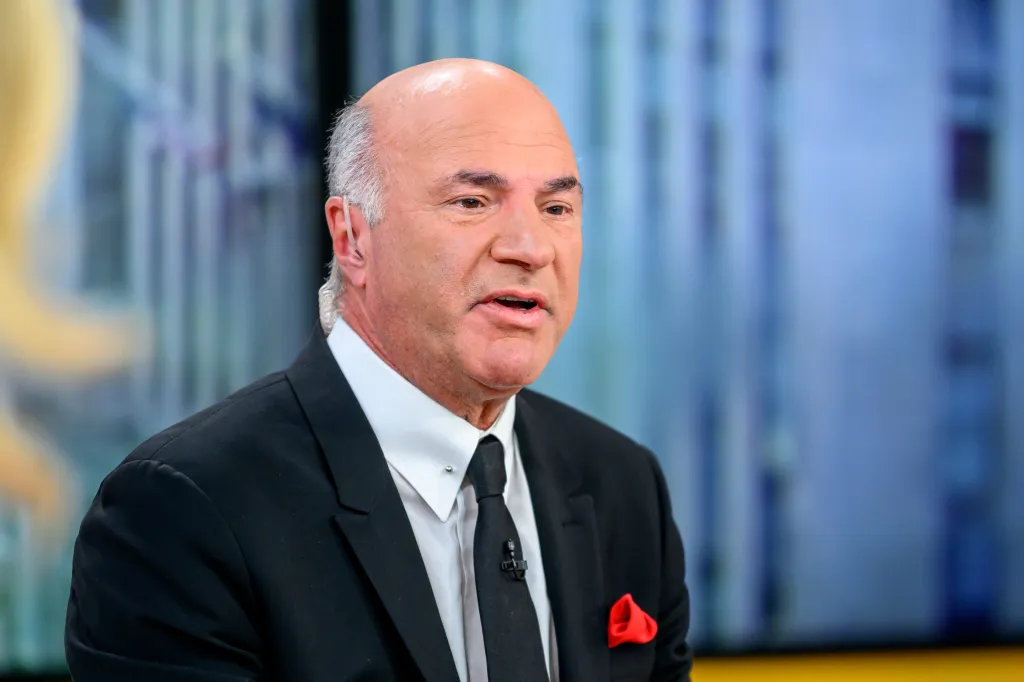
A legal challenge has emerged against Kevin O’Leary, known from *Shark Tank*, and Fox News, following O’Leary’s public accusations linking opponents of his proposed Utah data center to the Chinese Communist Party. Two Utah-based political organizations, Alliance for a Better Utah and Elevate Strategies, along with their founders, Joshua Kanter and Gabrielle Finlayson, have filed a defamation lawsuit in Utah Federal District Court. They contend that O’Leary’s statements have inflicted significant reputational damage, financial setbacks, emotional distress, and even threats to their physical safety.
The lawsuit specifies that O’Leary engaged in what it describes as a “smear campaign” across at least ten media appearances. During one interview on “Mornings with Maria,” O’Leary characterized the two organizations as “cells” orchestrating resistance to his data center project, explicitly stating, “These two cells, it’s the CPP [sic] at work here. There’s no question about it.” He reiterated these claims on “The Tucker Carlson Show,” alleging that Alliance for a Better Utah and Elevate Strategies were “taking the content from the CPP [sic], repurposing it, and jamming it down the throats of people in Utah on my social media feed.” These remarks, according to the plaintiffs, were broadcast repeatedly between May 11 and June 3.
Fox News Network is also named as a defendant in the suit. The plaintiffs argue that the network “repeatedly invited O’Leary onto its programs and allowed him to broadcast his false accusations to millions of viewers without any qualification.” However, Fox News Media stated they “publicly corrected the record on every program where on-air guest Kevin O’Leary’s comments were made, all of which was extensively publicized.” O’Leary’s attorney, Jeff Neiman, dismissed the lawsuit as a “cash grab,” suggesting it would open the organizations to further scrutiny. Neiman claimed O’Leary had clarified his remarks weeks prior and offered to engage with the organizations, an offer he says was declined. Indeed, O’Leary posted a statement on Instagram on June 25, clarifying, “I have no evidence that Alliance for a Better Utah, Elevate Strategies, Gabrielle Finlayson, Taylor Knuth or Josh Kanter are funded by China or the Chinese Communist Party.”
The law firm representing the plaintiffs, Platkin LLP, asserts that O’Leary’s Instagram clarification only came after he received a legal demand from their clients. They also noted that Fox News issued an apology and reported on O’Leary’s clarification shortly after his social media post. Despite these attempts to mitigate the situation, Platkin LLP stated that these efforts “fail to address the harms that O’Leary and Fox News caused during their weeks-long smear campaign.” The plaintiffs are seeking compensatory damages, to be determined at trial, along with punitive and exemplary damages sufficient to penalize the defendants and deter future misconduct.
The core of the dispute lies with O’Leary’s Stratos Project, an ambitious data center complex planned for Box Elder County, Utah, near the Great Salt Lake. This project, intended to support up to nine gigawatts of AI computing capacity, initially encompassed 40,000 acres, though O’Leary later reduced its footprint to 20,000 acres, with 10,000 designated for development. The proposal has ignited significant local opposition, driven by concerns over environmental impact, particularly on the region’s water supply. A contentious public meeting on May 4 saw protestors express their disapproval vocally, leading Box Elder County commissioners to leave the room and vote virtually to approve resolutions advancing the project.
The political fallout from this project has been tangible. Stuart Adams, the Utah state senate president and a vocal proponent of the data center, lost his re-election bid after two decades in the legislature. Similarly, two Box Elder County commissioners who voted to advance the project were defeated in their primaries. While Alliance for a Better Utah did join a lawsuit challenging the Military Installation Development Authority (MIDA), the state body that initially approved O’Leary’s project, the lawsuit argues that Kanter and Finlayson played a minimal role in organized opposition. Finlayson appeared in only one video about the project, and Kanter, despite serving on the Alliance’s board, made no public statements on the matter. This legal battle underscores a broader national trend where communities are increasingly resisting large-scale data center developments, driven by concerns over resource consumption and local impact, with a recent Gallup poll indicating widespread public opposition to such projects.