The reverberations from the ongoing conflict in Iran are extending far beyond the immediate battlegrounds, sending economic shudders across the globe. What began as an oil shock has rapidly broadened into a complex crisis affecting everything from global trade routes to the price of everyday necessities, demonstrating that the world economy’s resilience is being tested in unprecedented ways. Just a few weeks ago, some economists might have suggested that a swift cessation of hostilities could limit long-term damage, but the targeting of critical infrastructure has altered that perspective dramatically.
One of the most significant blows came with the March 18 attack on Qatar’s Ras Laffan natural gas terminal. This single strike, which eliminated 17% of Qatar’s liquefied natural gas (LNG) export capacity, is projected to require up to five years for full repair, according to state-owned QatarEnergy. Considering this facility alone accounts for a fifth of the world’s LNG production, the implications for global energy markets are profound and enduring. Coupled with the effective closure of the Strait of Hormuz by Iran on February 28, a transit point for a fifth of the world’s oil, the initial impact on oil prices was immediate and severe. Brent crude, which hovered around $70 a barrel before the conflict, surged to $105.32, while benchmark U.S. crude reached $99.64. The International Energy Agency characterized the resulting loss of 20 million barrels of oil a day as “the largest supply disruption in the history of the global oil market.”
This energy crisis directly fuels concerns about stagflation, a grim economic scenario reminiscent of the 1970s. Economists like Christopher Knittel from the Massachusetts Institute of Technology warn that historical oil price shocks of this magnitude often precipitate global recessions. Carmen Reinhart, formerly the World Bank’s chief economist, echoes this sentiment, highlighting the increased risk of higher inflation coupled with stunted growth. Projections from Gita Gopinath, former chief economist at the International Monetary Fund, indicate that global economic growth, initially forecast at 3.3% for the year, could see a reduction of 0.3 to 0.4 percentage points if oil prices average $85 a barrel through 2026. This downward revision underscores the sensitivity of global economic health to sustained energy market volatility. 
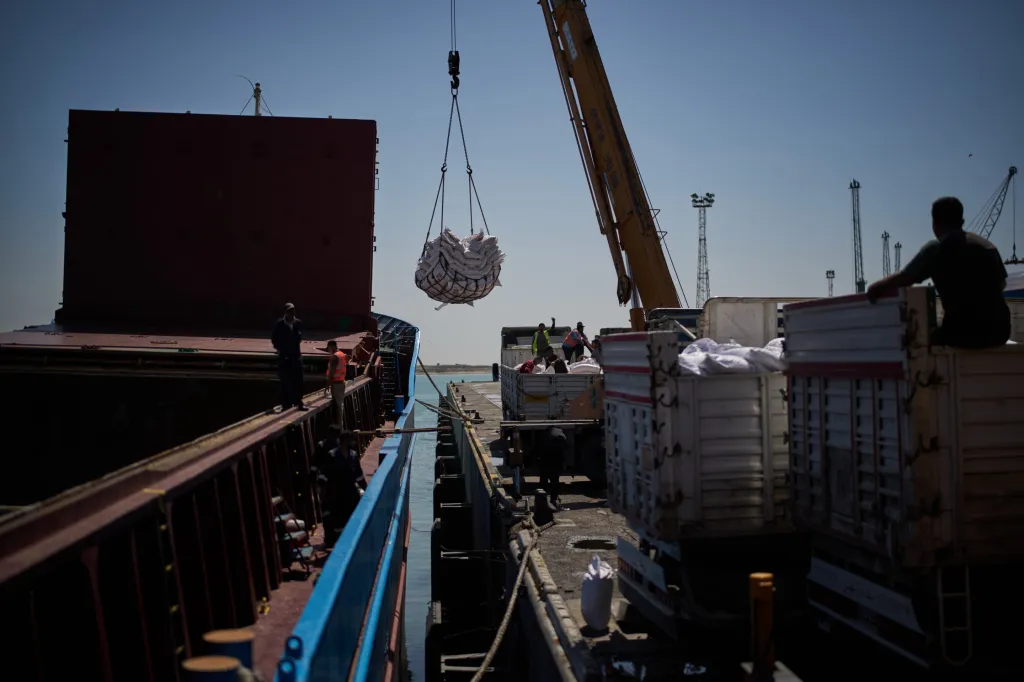
Beyond fuel, the conflict has severely impacted the agricultural sector. The Persian Gulf region is a crucial source for two vital fertilizers: one-third of global urea exports and a quarter of ammonia come from this area. With the Strait of Hormuz now blocked, a passage through which up to 40% of the world’s nitrogen fertilizer exports typically travel, prices have escalated sharply, with urea up 50% and ammonia 20%. This poses a particular challenge for countries like Brazil, which imports 85% of its fertilizer needs, as noted by Alpine Macro commodity strategist Kelly Xu. The inevitable consequence will be higher food prices and potentially reduced yields as farmers curtail fertilizer use, disproportionately affecting families in developing nations.
The ripple effects extend even to less obvious commodities, such as helium. Qatar, through its Ras Laffan facility, provides a third of the world’s helium, a crucial byproduct of natural gas essential for chipmaking, medical imaging, and rocket technology. Disruptions to this supply chain highlight how interconnected global industries are and how a regional conflict can have far-reaching technological implications. Fatih Birol, head of the International Energy Agency, starkly warned on March 23 that “No country will be immune to the effects of this crisis if it continues to go in this direction.”
Developing countries, particularly in Asia, face an acute challenge. Over 80% of the oil and LNG transiting the Strait of Hormuz is destined for Asian markets. The Philippines has already implemented a four-day work week for government offices and strict air conditioning limits, while Thailand encourages public workers to use stairs instead of elevators. India, the world’s second-largest importer of liquefied petroleum gas (LPG) for cooking, is prioritizing households and subsidizing costs, yet LPG shortages have forced eateries to modify operations. South Korea has reintroduced fuel price caps, a measure not seen since the 1990s, and is restricting public employee car use. Even the United States, an oil exporter, is feeling the pinch of rising gasoline prices, with the average gallon nearing $4, up from $2.98 just a month prior. This contributes to consumer frustration amidst existing high living costs, and economists like Mark Zandi of Moody’s Analytics note that “Nothing weighs more heavily on consumers’ collective psyche than having to pay more at the pump.”
The global economy had demonstrated resilience through previous shocks, from a pandemic to the war in Ukraine and surging inflation. However, the sustained attacks on energy infrastructure in the Persian Gulf are eroding that optimism. Lutz Kilian, director of the Center for Energy and the Economy at the Federal Reserve Bank of Dallas, points out that the damage to LNG facilities in Qatar alone will take years to repair, alongside necessary repairs to refineries and tankers. The recovery process, even under optimal conditions, will be protracted. As Zandi and his colleagues conclude, “There is no economic upside to the conflict with Iran,” leaving the world to ponder the duration of hostilities and the ultimate extent of the economic damage.