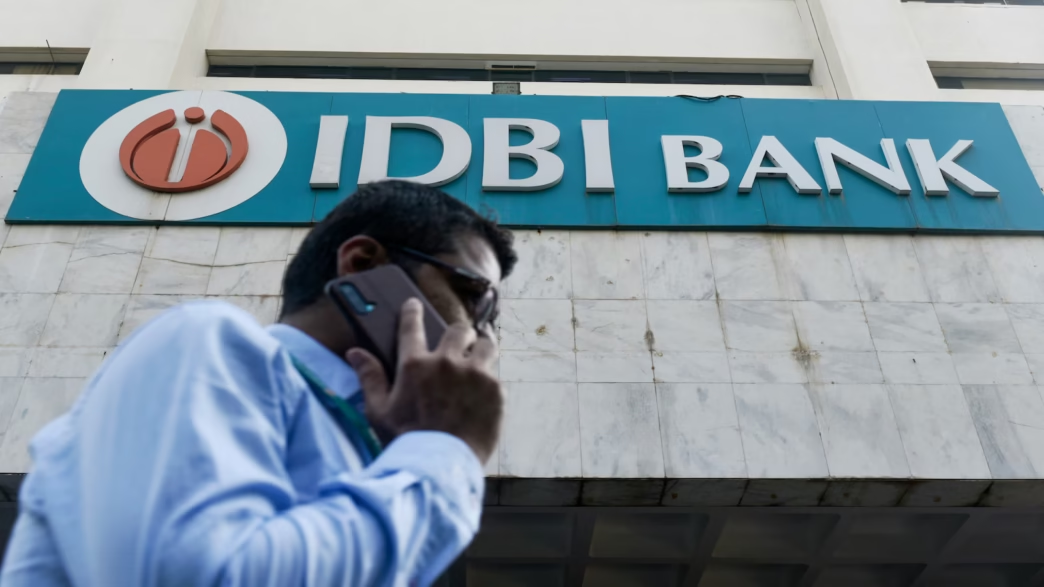
India is preparing to invite binding bids for the long-awaited sale of a $7 billion stake in IDBI Bank, marking a significant step in the government’s broader privatization agenda and efforts to attract global capital into its financial sector. According to industry sources, the formal bidding process could begin as early as this month, as New Delhi accelerates plans to offload a controlling interest in the lender jointly held by the central government and Life Insurance Corporation of India (LIC).
The sale represents one of the largest bank privatizations in India’s history and is seen as a test case for future divestments in the country’s financial ecosystem. With improved macroeconomic stability, strong bank balance sheets, and rising investor confidence, officials believe the timing is favorable for bringing in strategic international partners.
Among potential suitors is Emirates NBD, one of the Middle East’s most prominent banking groups. The Dubai-based lender recently made headlines by announcing a major acquisition of a majority stake in RBL Bank, underscoring its ambition to deepen its footprint in South Asia’s fast-growing banking market. Other global and domestic institutions are expected to evaluate the opportunity as details of the sale evolve. 
What the IDBI Bank Sale Represents for India
The privatization of IDBI Bank is central to India’s strategy to modernize its financial sector, reduce state ownership, and bring in sophisticated global operators who can fuel competition, innovation, and efficiency.
1. A Landmark in India’s Banking Reform Agenda
The government has long signaled its intention to reduce public-sector dominance in banking. Selling a controlling stake in IDBI Bank would:
- Mark the first major privatization of a state-linked bank in decades
- Set a precedent for future banking-sector divestments
- Introduce fresh global expertise into the sector
2. Strengthening the Financial System
Policymakers aim to:
- Improve operational efficiency through private management
- Enhance underwriting and risk assessment
- Accelerate digital transformation
- Attract capital, technology, and best practices
3. Enhancing India’s Appeal to Foreign Investors
With its robust economic growth and rapidly expanding consumer base, India is increasingly positioning itself as a global investment hub. Allowing foreign banks to acquire controlling stakes in domestic lenders sends a powerful signal of openness to international capital.
Why Global Banks Are Paying Close Attention
International financial institutions see India as one of the world’s most attractive long-term markets, driven by:
- A population of 1.4 billion
- Rapid urbanization
- Expanding middle-class financial needs
- Strong digital adoption in payments and banking
- Improving regulatory oversight
The IDBI stake offers an opportunity to acquire a significant platform with nationwide reach.
Emirates NBD’s Strategic Interest
Emirates NBD is emerging as one of the most aggressive global suitors:
- Already among the top lenders in the Middle East
- Expanding presence into Turkey, Egypt, and now India
- Seeking regional diversification and long-term growth
- Recently agreed to acquire a majority stake in RBL Bank
- Well-capitalized and supported by strong Gulf liquidity
The bank views India as a natural extension of its geographic network and sees potential alignment with the country’s fintech-oriented growth trajectory.
What Makes IDBI Bank an Attractive Asset
Despite historical challenges, IDBI Bank has undergone significant restructuring in recent years.
1. Improved Financial Health
Under LIC and government guidance, the bank has:
- Reduced non-performing assets
- Strengthened capital buffers
- Improved operational efficiency
- Expanded its digital capabilities
2. Wide Branch Network
With hundreds of branches nationwide, IDBI Bank offers a ready-made distribution platform that would take years for a foreign entrant to build organically.
3. Opportunity for Turnaround Value
Buyers may see strong upside potential through:
- Improved governance
- Streamlined operations
- Modern risk management
- Digital transformation initiatives
The Sale Structure and Process
The government and LIC jointly hold around 95% of IDBI Bank and plan to sell a majority stake to a strategic investor. Key expectations include:
- A minimum holding threshold required for control
- Fit-and-proper assessment by regulators
- Strict scrutiny of foreign ownership
- Commitments on investment, governance, and oversight
The upcoming bidding round will be the first significant test of investor appetite.
Regulatory and Geopolitical Considerations
Any foreign acquisition of a major financial institution in India will face:
- RBI approval
- Government vetting under national security frameworks
- Compliance with ownership caps in sensitive sectors
Additionally, India’s increasing geopolitical ties with the Middle East—especially the UAE and Saudi Arabia—may influence regulatory considerations.
Risks and Challenges for Bidders
Despite enthusiasm, the transaction presents several challenges:
• Valuation Uncertainty
Potential investors must assess:
- Legacy asset risks
- Integration costs
- Future capital expenditure
• Competitive Bidding
Multiple global and domestic players could compete, raising the valuation and complicating negotiations.
• Sectoral Competition
India’s private banks—like HDFC Bank, ICICI Bank, and Kotak Mahindra Bank—are already highly efficient and technologically advanced.
• Regulatory Approvals
Foreign banks often face complex approval processes in India.
What the Outcome Could Mean for India’s Banking Future
If successful, the IDBI Bank sale would:
- Boost India’s global credibility in privatization
- Encourage further foreign investment into financial services
- Improve competition in the banking sector
- Accelerate innovation and technology adoption
- Potentially pave the way for more private or foreign-led banking acquisitions
It could also create a new, powerful player with strong global backing—reshaping competitive dynamics.
Conclusion: A Defining Moment for India’s Banking Reforms
India’s readiness to invite bids for a $7 billion stake in IDBI Bank signals the government’s determination to modernize its financial system and embrace global capital. With heavyweight institutions like Emirates NBD showing interest, the stage is set for one of the most consequential banking transactions in India’s recent history.
The coming weeks will determine whether the privatization gains strong global traction and whether India can successfully achieve its broader goal of bringing world-class banking expertise into one of the fastest-growing economies on earth.