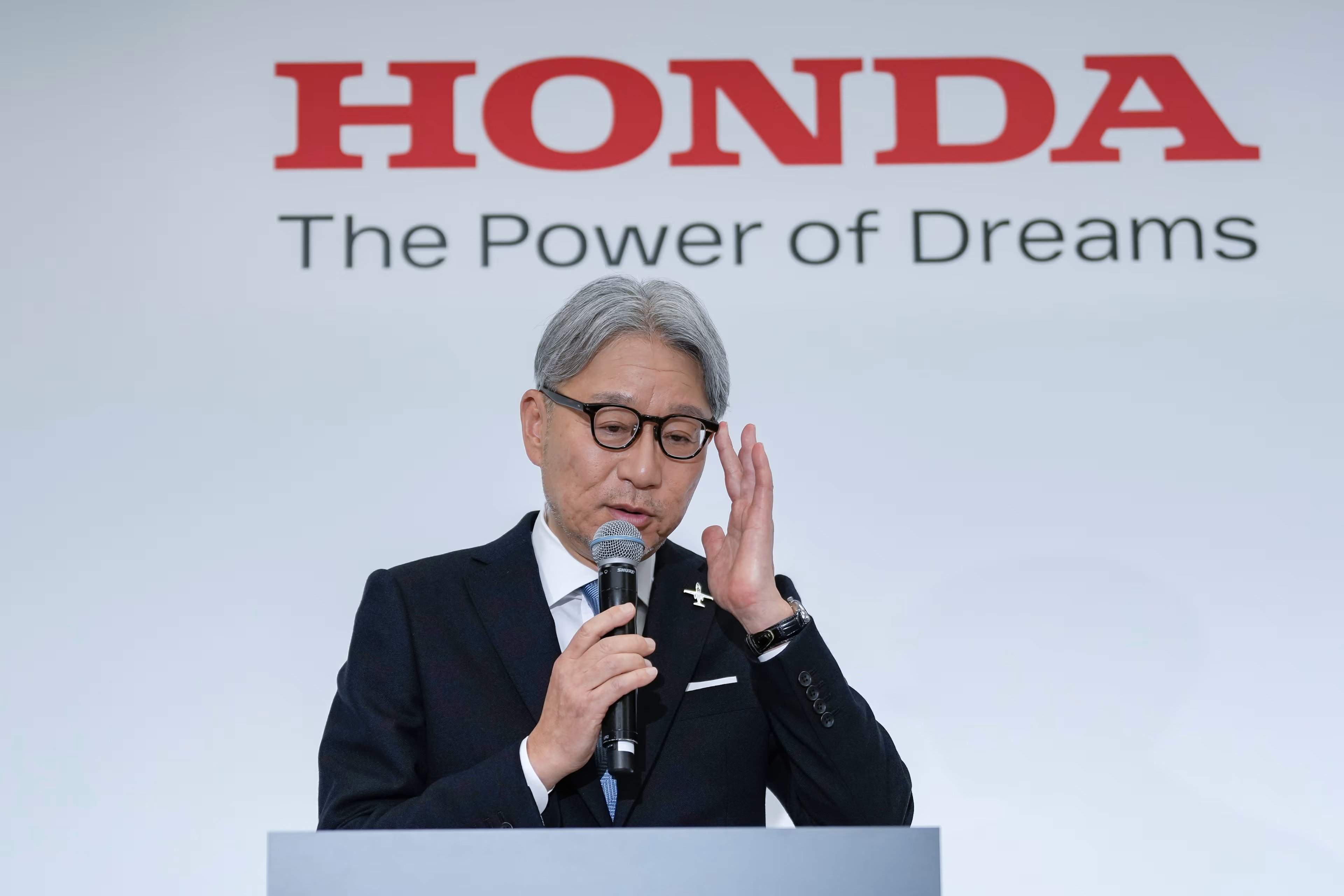
The automotive industry, long accustomed to forecasting trends years in advance, is currently grappling with an unforeseen recalibration, and Honda finds itself directly in the crosshairs. The Japanese automaker recently signaled an impending charge of 2 trillion yen, approximately $15.7 billion, a stark acknowledgment of the decelerating demand within the global electric vehicle market. This significant financial adjustment underscores a broader sentiment among legacy manufacturers: the transition to an all-electric future is proving more complex and less linear than initially projected.
For years, the narrative surrounding electric vehicles painted a picture of relentless, exponential growth. Governments worldwide offered incentives, and environmental pressures mounted, pushing carmakers to commit vast resources to electrification. Honda, like many of its peers, outlined ambitious EV production targets, investing heavily in new platforms, battery technology, and dedicated manufacturing facilities. This substantial charge reflects the re-evaluation of those earlier, perhaps overly optimistic, projections. It’s not merely a matter of fewer cars being sold; it’s about the underlying assumptions regarding market adoption rates, consumer preferences, and the pace of infrastructural development that are now being questioned.
Industry analysts suggest several factors contributing to this slowdown. High interest rates in key markets, for instance, have made financing new vehicles, particularly premium-priced EVs, less attractive for consumers. Persistent concerns over charging infrastructure availability, especially in sprawling suburban and rural areas, also continue to deter potential buyers. Furthermore, improvements in the efficiency and emissions reduction of internal combustion engine vehicles, coupled with the introduction of more sophisticated hybrid options, offer alternatives that some consumers find more practical for their immediate needs. The initial surge of early adopters, eager to embrace new technology, has largely been satisfied, and the market is now entering a more challenging phase of attracting mainstream buyers. 
This financial hit for Honda is not an isolated incident but rather a prominent indicator of a wider phenomenon impacting the entire automotive sector. Other major players have also begun to adjust their EV strategies, scaling back production targets, delaying new model launches, or re-emphasizing hybrid options as a bridge technology. The immense capital expenditure required to retool factories and develop entirely new vehicle architectures means that miscalculations in market timing or demand can have profound and lasting financial consequences. Companies that fail to adapt swiftly risk being burdened by underutilized assets and inventory.
Looking ahead, Honda’s strategic response to this challenging environment will be closely watched. This could involve a more diversified powertrain strategy, emphasizing a mix of traditional hybrids, plug-in hybrids, and battery electric vehicles to cater to a broader spectrum of consumer needs and regional market dynamics. It might also accelerate efforts to reduce the cost of EV production, making electric models more accessible to a wider demographic. The $15.7 billion charge is more than just a line item on a balance sheet; it represents a critical inflection point, forcing a re-evaluation of the industry’s trajectory and a sobering assessment of the path forward for global electrification. The road to an all-electric future, it seems, is proving to have more twists and turns than anyone initially anticipated.