Disney’s cruise line operations quietly recorded over $3 billion in revenue last year, a significant milestone that underscores the company’s aggressive expansion strategy in the maritime leisure sector. This figure, revealed in a UK regulatory filing, marks the first time Disney’s cruise division has publicly crossed this threshold, driven by the addition of a sixth ship and a broader surge in global cruising popularity. The company’s financial disclosures in the United States typically fold cruise performance into its larger “Experiences” division, obscuring the specific contributions of its floating theme parks.
The growth is particularly notable given Disney’s long-standing reticence to detail cruise revenues. CFO Hugh Johnston has consistently declined to break out these numbers on earnings calls, maintaining a deliberate lack of specificity around this segment. However, the UK filing, necessitated by the cruise line’s operational base in London through a subsidiary known as “Magical Cruise Company,” offers a rare glimpse into the financial health of this premium travel offering. This structure, which benefits from the UK’s advantageous Tonnage Tax regime, allows the cruise line to pay a fixed tax based on fleet size rather than a percentage of its substantial income, a strategic move for a high-margin enterprise.
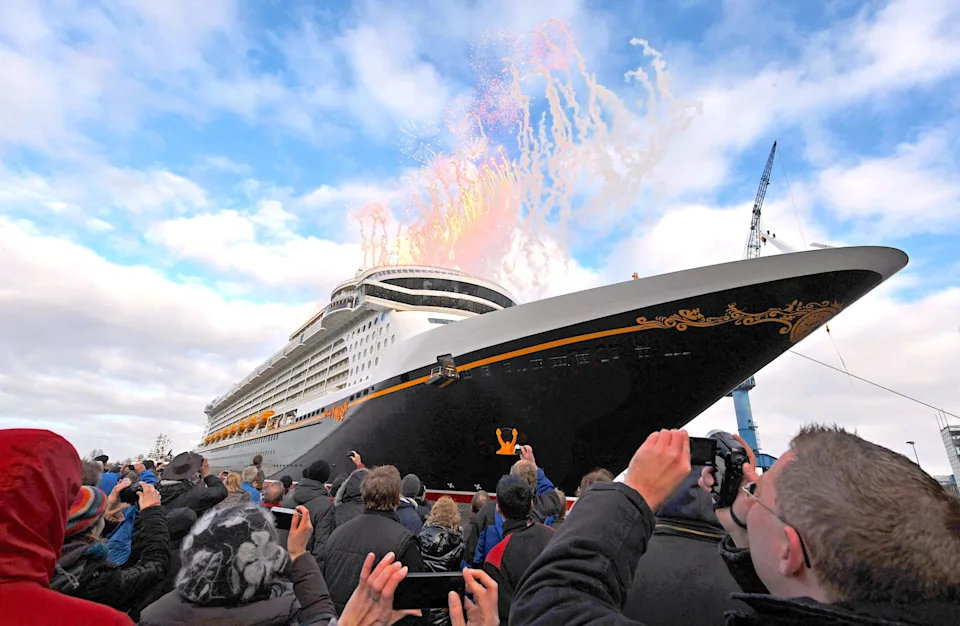
Disney’s commitment to expanding its presence on the high seas is undeniable. The company plans to add five more ships to its fleet by 2031 as part of a colossal $60 billion investment in its Experiences division, with approximately 20% earmarked for cruise development. This ambitious plan follows recent additions like the Disney Treasure, launched in December 2024, and two more vessels, the Disney Destiny and Disney Adventure, which debuted within six months of the financial statements being filed. The Disney Adventure, notably acquired for a mere $44 million after its previous owner faced administration, has been transformed with Disney’s signature touch, featuring the longest roller coaster at sea and a three-deck-tall castle.
The expansion is not without its costs. While revenue climbed by 20.3% to $3 billion in the year ending September 27, 2025, net profits saw a 12.9% dip to $302.7 million. This was primarily attributed to increased operational expenses and pre-launch costs associated with the new ships. Staffing costs alone jumped by 31.4% to $437.2 million, largely due to the hiring of 1,765 new employees, predominantly shipboard personnel, to manage the expanding fleet. Jeff Swindell, Senior Vice President of Finance at Disney Signature Experiences, acknowledged these “one-time costs associated with business growth initiatives” in the financial statements, anticipating strong profitability to resume in fiscal year 2026.
Beyond the financial mechanics, Disney’s cruise ships are designed to be extensions of its theme parks, offering Broadway-caliber shows, character interactions, and immersive water slides. The company’s venture into cruising dates back to a partnership with Premier Cruise Lines in 1985, evolving into its own independent launch of the Disney Magic in 1998. This included securing a 99-year lease on a private Bahamian island, Castaway Cay, which innovated by allowing direct ship docking. The strategic decision to base its cruise operations in the UK also provides access to global maritime services, including the renowned Lloyd’s of London, and was convenient when the initial ships were built in nearby Italy.
A significant new chapter in this expansion involves a partnership with Japan’s Oriental Land Company (OLC), which will finance, own, and operate a new Disney ship under license. OLC projects annual net sales of $650 million from this single vessel alone within its first few years, with an impressive operating margin of nearly 27%. This move into Asia, particularly with the Disney Adventure based in Singapore and featuring a high-profile launch event, signals Disney’s intent to tap into what Swindell described as “one of the most dynamic, culturally diverse and well-connected travel regions in the world.” Despite these aggressive growth plans, Disney remains a relatively smaller player in the cruise market, carrying an estimated 1 million passengers in 2025, a fraction of industry leader Carnival’s 6.8 million. The current trajectory, however, suggests Disney is positioning itself for a much larger share of the global cruise industry in the coming years.