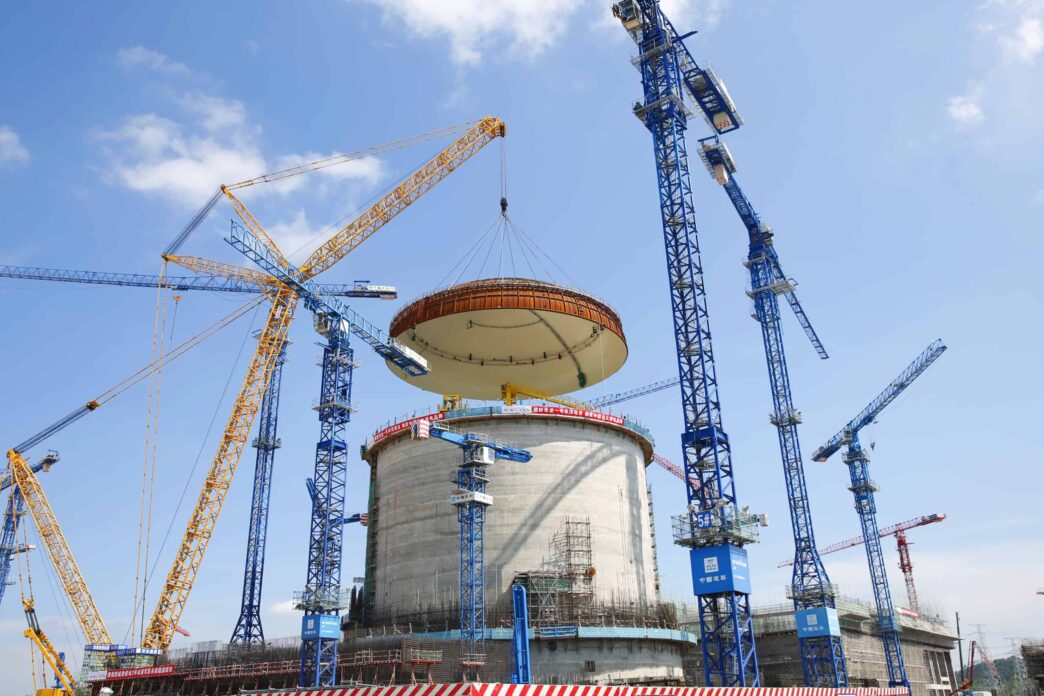
The global landscape of nuclear energy development witnessed a significant shift last year, with China and Russia collectively undertaking the vast majority of new atomic power projects worldwide. These two nations are increasingly asserting their influence in the sector, a trend evident in the construction of facilities like the Hualong One unit at the Fangchenggang nuclear power plant in China’s Guangxi Zhuang Autonomous Region. This particular unit, visible with its distinctive dome, represents just one facet of their expanding footprint in an energy market hungry for reliable, large-scale power generation.
Analysis of recent activities indicates that roughly 90% of all new nuclear power initiatives launched last year were spearheaded by Beijing and Moscow. This concentration of development suggests a strategic push by both countries to not only bolster their domestic energy security but also to become leading exporters of nuclear technology and expertise to emerging economies. Their approach often involves comprehensive packages that include financing, reactor construction, and long-term fuel supply, making their offerings particularly attractive to nations seeking to establish or expand their nuclear capabilities without bearing the full financial and technical burden themselves.
This near-monopoly on new nuclear plant undertakings allows China and Russia substantial leverage in setting industry standards and influencing future energy policies in client states. For many developing countries, the promise of stable, carbon-free electricity generation outweighs concerns about geopolitical implications or the long-term commitments inherent in these projects. The transfer of nuclear technology, while strictly regulated internationally, also represents a significant geopolitical tool, fostering deeper ties between the supplier and recipient nations. 
The expansion is not without its complexities. The long operational lifespans of nuclear power plants mean that these agreements can span decades, locking in relationships and dependencies that extend far beyond initial construction. The involvement of state-owned enterprises from both China and Russia in these ventures further blurs the lines between commercial enterprise and national strategic objectives, a characteristic often absent in the nuclear exports of Western nations.
As the demand for energy continues to grow globally, particularly in parts of Asia, Africa, and Latin America, the offerings from China and Russia present a compelling option for countries looking to diversify their energy mix away from fossil fuels. Their capacity to deliver integrated solutions, from initial design to waste management, streamlines the process for nations less experienced in nuclear infrastructure. This comprehensive approach differentiates them from many competitors who might offer only components or specific services.
The implications of this growing dominance are far-reaching. It shapes not only the future of global energy production but also international relations, trade agreements, and technological standards. The focus on development and exports to emerging economies underscores a broader strategy to cultivate influence and secure new markets for their advanced industrial capabilities. As more nations consider nuclear power as a cornerstone of their energy future, the roles played by Beijing and Moscow in facilitating this transition will only become more pronounced.