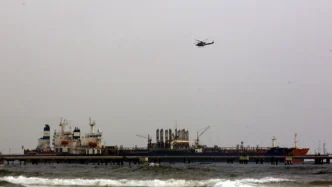

The White House confirmed Wednesday the seizure of a significant oil tanker off the coast of Venezuela, a move President Donald Trump termed as having occurred “for a very good reason,” though he offered few immediate specifics. This action marks a notable escalation in Washington’s ongoing pressure campaign against the government of President Nicolás Maduro, drawing swift and sharp condemnation from Caracas, which labeled the incident as “blatant theft and an act of international piracy.”
Venezuelan authorities wasted little time in asserting that the seizure unmasked the true motivations behind persistent US aggression. In a public statement, the foreign ministry declared, “It has always been about our natural resources, our oil, our energy and the resources that belong exclusively to the Venezuelan people.” This sentiment underscores a long-held belief within the Maduro administration that Washington’s diplomatic and economic pressures are fundamentally driven by a desire to control Venezuela’s vast oil reserves.
Details surrounding the operation suggest a coordinated effort. A US official indicated the Coast Guard spearheaded the seizure, benefiting from Navy support. Compelling visual evidence surfaced online, shared by US Attorney General Pam Bondi, depicting Coast Guard personnel executing a daring rope descent from helicopters onto the vessel’s deck. The footage further showed uniformed officers, weapons drawn, navigating the ship’s superstructure, indicating a well-planned and executed interdiction. 
The tanker in question, identified in various US media reports as the *Skipper*, departed Venezuelan waters around December 2nd. Its cargo, estimated at approximately two million barrels of heavy crude, was reportedly destined for a Cuban state-run oil importer for roughly half its contents, according to documents from PDVSA, Venezuela’s state oil company. Ship tracking data provided additional context, revealing the vessel’s previous designation as M/T *Adisa*. This detail is particularly salient given that the *Adisa* was sanctioned by the US in 2022. Those sanctions were levied on the grounds that the tanker allegedly formed part of a network of “shadow tankers” involved in the illicit smuggling of crude oil for Iran’s Revolutionary Guard and Hezbollah, a network the US Treasury Department previously linked to a Switzerland-based Ukrainian oil trader.
This bold interdiction follows other recent demonstrations of US resolve in the region. Just days prior, two US fighter jets conducted a flyover of the Gulf of Venezuela, marking what appeared to be the closest approach by US combat aircraft to Venezuelan airspace since the current administration’s pressure campaign began. Furthermore, Washington has significantly increased its military presence in the area, deploying its largest regional force in decades, and has actively conducted strikes against suspected drug trafficking vessels in the Caribbean Sea and eastern Pacific Ocean.
While President Trump has alluded to planned ground attacks without providing specific details on their location or scope, the seizure of the *Skipper* adds a new dimension to the already strained relationship. This development occurs despite a recent telephone conversation between President Maduro and President Trump late last month, which the Venezuelan leader had characterized as a potential opening for “respectful dialogue.” The current events suggest that such dialogue, if it were ever truly on the table, has now been overshadowed by a tangible act of force, further deepening the chasm between the two nations.