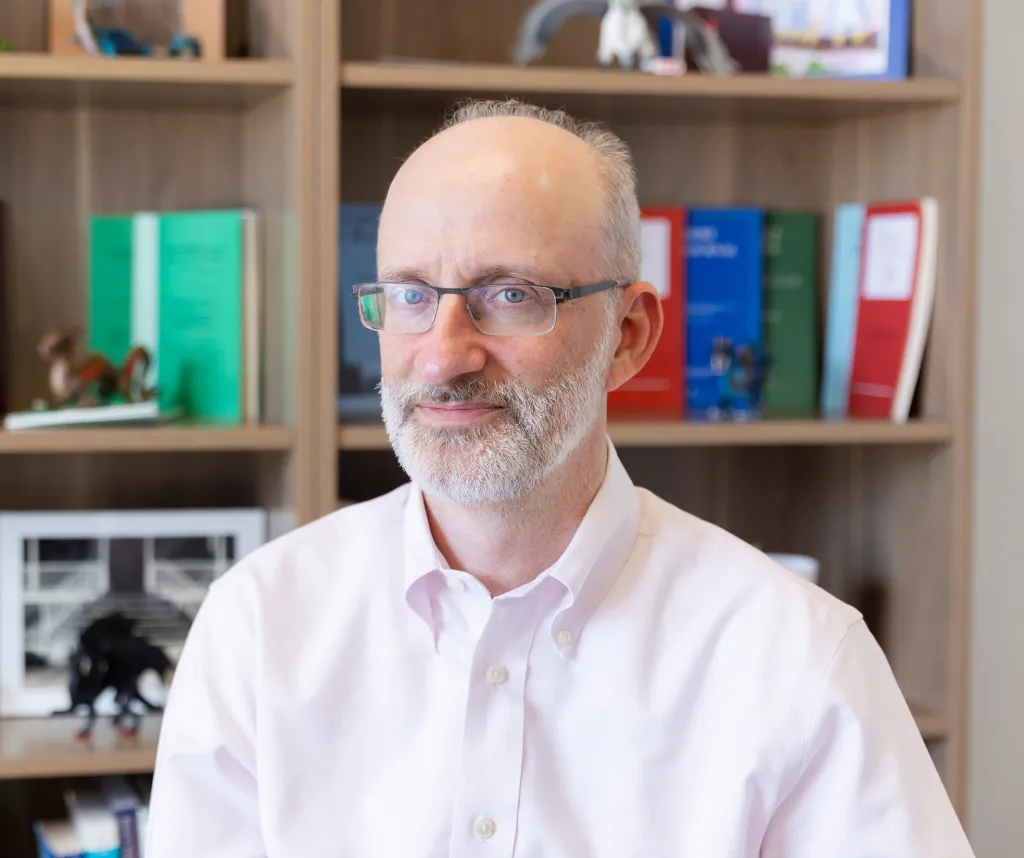
The assertion that a 1% annual wealth tax would cripple ultra-wealthy individuals or their businesses is “nonsense,” according to Brian Galle, a tax law expert and primary architect of California’s proposed wealth tax legislation. Galle, who describes himself as an “enthusiastic capitalist,” believes the current capitalist system in the United States is not functioning optimally, leading to economic issues such as slow growth, inflation, and stagnation. His forthcoming book, *How to Tax the Ultrarich*, argues that economic dominance by a small number of families contributes to these problems.
Galle, who recently transitioned to California after a decade at Georgetown Law, played a pivotal role in drafting the legislative text for Assemblymember Alex Lee’s wealth tax bill, often referred to as the “billionaires’ tax.” This proposal aims to address California’s substantial budget deficit. While earlier iterations of the bill garnered little attention, Galle suggests the current version has drawn significant scrutiny, particularly from the state’s wealthiest residents, precisely because its chances of passing are perceived as relatively high. His background includes involvement with Senator Elizabeth Warren’s wealth tax bill during her presidential campaign and the submission of an amicus brief cited by Justice Ketanji Brown Jackson in the 2024 Supreme Court case, *Moore v. United States*. That case, which upheld an international tax provision without broadly ruling on the taxation of “unrealized” gains, touches on a core issue for wealth taxes.
A central concern for Galle is the American tax system’s allowance for the wealthy to dictate when they pay taxes, often deferring indefinitely. Citing economist Emmanuel Saez’s research, Galle points out that billionaires effectively pay an all-in tax rate approximately 20% lower than the median American household. He contends that despite appearing progressive on paper, the tax code is not so in practice, largely because the ultra-wealthy can strategically choose when to sell assets and realize capital gains, which triggers taxation. Until then, they can leverage the “buy-borrow-die” strategy, continuously taking out loans against their assets to finance their lifestyles. Galle observes that while ordinary individuals might have limited options for borrowing against savings, the process is likely even more streamlined for billionaires. 
Critics of California’s proposal, including tech billionaire Palmer Luckey, have expressed fears that a wealth tax would necessitate liquidating businesses and laying off employees to meet tax obligations. Galle strongly refutes this, stating that the notion of having to sell a significant portion of assets to cover a 1% annual tax is simply not credible. He also dismisses arguments that wealth taxes are inherently flawed due to their repeal in countries like France, instead highlighting successful and sustained models in Switzerland and Spain that effectively closed loopholes for privately held businesses. The rollback of some wealth taxes globally, Galle suggests, can be attributed to billionaires and their legal teams becoming increasingly adept at exploiting loopholes and the optionality of when to pay taxes. While acknowledging the complexities of valuing diverse assets, including esoteric private art collections, Galle believes these are “solvable” through established formulas and appraisal methods.
Kent Smetters, a Wharton professor and faculty director of the Penn Wharton Budget Model, concurs that such valuation issues are solvable and acknowledges the “buy-borrow-die” model as a legitimate concern, noting it lacks coherent tax principles. Smetters, who has previously indicated that taxing billionaires might not generate as much revenue as commonly believed, recognizes that for many, the issue is fundamentally moral. He suggests that wealth tax advocates are driven by this principle, and it is indeed true that some extremely wealthy individuals can manage their tax rates by borrowing against their fortunes and avoiding the realization of capital gains. Smetters identifies the “step-up in cost basis” at death as a critical factor, where inherited assets are revalued to their fair market value. Eliminating this, he argues, could significantly disrupt common ultra-wealthy tax planning strategies and address fairness concerns.
Galle’s book primarily focuses on the practical implementation of such tax reforms. He views California’s proposed billionaires’ tax as a localized solution for a state facing a substantial funding gap. Instead, he advocates for a federal-level approach, outlined in detail in his forthcoming book as the “FAST” plan. This plan would align with anticipated Supreme Court requirements by taxing wealthy individuals only when they sell assets. However, it would introduce an interest rate that retroactively negates the financial advantages of delaying sales. By applying an “economically accurate rate of interest,” the FAST plan aims to remove incentives for hoarding assets to minimize tax liabilities, thereby encouraging earlier sales. This measure would target the highest tier of wealth holders, likely those with over $30 million in assets.
The FAST plan also addresses the step-up in cost basis by substituting the existing estate and gift tax system with an additional tax bracket for inherited property. This would effectively transition to an inheritance tax with a carryover basis at death, again incorporating extra interest charges for taxpayers who defer sales. Galle acknowledges the Supreme Court’s potential reluctance to permit taxing unrealized gains, as signaled by the *Moore* ruling, and emphasizes that his proposal is designed to be legally sound. He frames these proposals not as punitive measures against success, but as essential maintenance for a capitalist system currently distorted by “disproportionate billionaire power.” Galle argues that a well-functioning capitalist system necessitates a “fair, functional tax system,” contrasting it with the current framework that allows the wealthiest to circumvent their tax responsibilities. While admitting there are no “magic wands,” Galle asserts that the existing tax code exacerbates economic inequality, and incremental progress is vital for fostering a healthy economy.