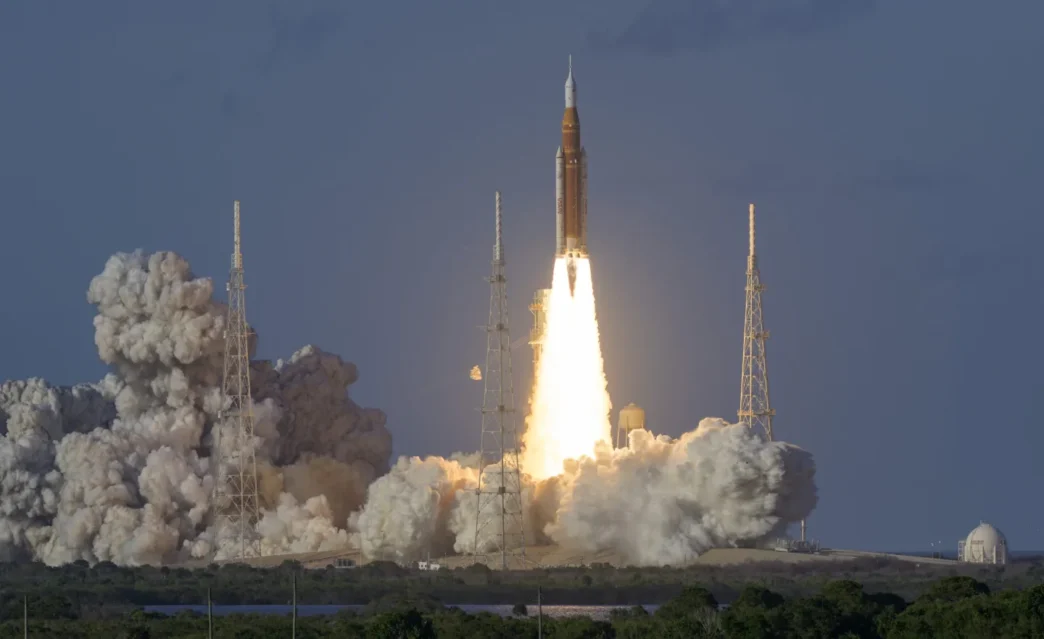
The future of Boeing’s Space Launch System, the super heavy-lift rocket central to NASA’s Artemis lunar exploration program, hangs in a delicate balance as the prospect of a new presidential administration looms. With former President Donald Trump indicating a potential return to the White House, questions naturally arise about the continuity of current space policies and the budgetary allocations that underpin them. This uncertainty is not an anomaly in the landscape of long-term government projects, particularly those as ambitious and costly as human spaceflight, but it introduces a layer of strategic recalculation for both NASA and its primary contractors.
Boeing has been a cornerstone of American space endeavors for decades, and the SLS represents a significant portion of its human spaceflight portfolio. Designed to launch astronauts and cargo beyond low Earth orbit, the rocket has faced a protracted development timeline and substantial cost overruns, drawing criticism from various quarters. Despite these challenges, it successfully completed its uncrewed Artemis I mission in late 2022, a critical milestone that demonstrated its capabilities. However, the momentum from that success could be tempered by a shift in administrative focus, potentially impacting the pace and even the ultimate scope of subsequent Artemis missions.
A change in presidential administrations often brings a re-evaluation of agency directives and spending. While bipartisan support for space exploration has generally been strong, the specific priorities within that broad mandate can vary significantly. A Trump administration, for instance, might opt to re-emphasize certain aspects of space exploration over others, or even seek to accelerate the involvement of commercial partners in ways that could alter the existing contractual framework. Such shifts could lead to a reprioritization of funds, potentially affecting the cadence of SLS production and future upgrades. 
NASA’s current plan calls for regular Artemis missions, culminating in a sustained human presence on the Moon. This ambitious agenda relies heavily on the capabilities of the SLS for crew and large cargo transport. Any slowdown in the program’s schedule or a significant re-scoping of its objectives would inevitably have ripple effects through Boeing’s manufacturing lines and its extensive supply chain. Thousands of jobs across multiple states are tied to the SLS program, making its trajectory a matter of considerable economic as well as scientific interest.
The space industry, in general, thrives on predictability, yet it simultaneously adapts to evolving political landscapes. Companies like Boeing constantly navigate these currents, balancing long-term strategic investments with the need for flexibility. The existing contracts and the substantial investment already made in the SLS program provide a degree of inertia, making a complete abandonment unlikely. However, a recalibration of goals or a mandate for greater efficiency could still lead to substantive changes in how the program is managed and funded moving forward. All eyes will be on the signals emanating from Washington should there be a change in leadership, as those signals will ultimately dictate the path for NASA’s lunar ambitions and the powerful rocket designed to achieve them.