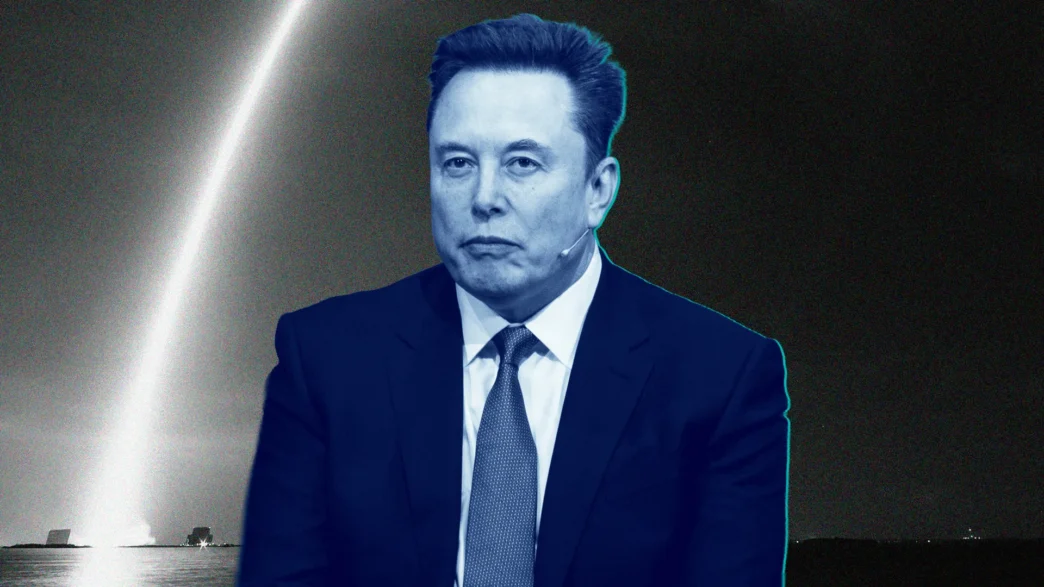
A potential SpaceX mega-IPO—long speculated by investors and now gaining new momentum—could propel Elon Musk into uncharted financial territory, with analysts estimating he would become a trillionaire almost overnight if the company were to list at the projected multi-trillion-dollar valuation. The discussion around SpaceX going public, once theoretical, has intensified following recent reports that the company is considering a structure that could ultimately unlock $2.9 trillion worth of related listings, spanning Starlink, Starship, and multiple satellite-infrastructure segments.
If the plan materializes even partially, it would mark the most consequential public offering in history. But more significantly, it would create a wealth event with no precedent: Musk’s ownership in SpaceX, now his most valuable asset, would skyrocket in value, eclipsing his stakes in Tesla, X (Twitter), Neuralink, and The Boring Company. Analysts say the implications—for markets, for global technology, for geopolitics, and for Musk’s personal influence—would be transformative.
Why SpaceX’s IPO Would Be Unlike Anything in Market History
To understand why Musk could become a trillionaire in a single IPO event, one must appreciate the scale of SpaceX’s expansion across several high-value industries: 
1. Starlink: A Global Telecommunications Giant in Waiting
Starlink already has millions of subscribers and growing government contracts.
Estimates place a standalone Starlink IPO value at $80 billion to $120 billion today, with projections exceeding $1 trillion within the decade as satellite broadband becomes a core global infrastructure.
2. Starship: The System That Could Commercialize Space
Starship is designed for:
- Deep-space missions
- Lunar landings
- Mars transport
- Huge satellite payload launches
- Space manufacturing
If successful, Starship becomes the core platform for every high-value space economy industry in the next 50 years. Analysts value the program alone at $500 billion to $1.5 trillion.
3. SpaceX Launch Services: Already Dominating the Global Market
SpaceX operates ~70% of all commercial orbital launches. The Falcon and Starship platforms generate enormous demand from:
- NASA
- Defense agencies
- Global satellite companies
- Commercial operators
This segment could justify $200 billion to $350 billion on its own in a public listing.
4. Space Infrastructure, Defense Contracts, and Data Services
SpaceX is rapidly expanding into:
- Satellite imaging
- Government intelligence systems
- Direct-to-device communication
- Defense-grade secure communications
- Space-based cloud computing (the emerging “orbital cloud”)
These future businesses have multi-trillion-dollar potential across the next decade.
The Combined IPO Value: Up to $2.9 Trillion
Reports indicate that SpaceX is considering a multi-entity listing approach, which could include:
- Starlink IPO
- Core Launch Business IPO
- Space Defense Systems IPO
- Starship Program IPO
If all four came to market across a staggered 3–7 year plan, the cumulative valuation could reach $2.9 trillion, dwarfing every listing in global financial history.
To compare:
- Apple market cap: ~$3 trillion
- Microsoft market cap: ~$3.2 trillion
- Saudi Aramco IPO raised: $29 billion
- Alibaba IPO raised: $25 billion
- SpaceX potential capital raised: Hundreds of billions
This would reshape the global equity landscape, with SpaceX becoming a cornerstone of future aerospace and AI-integrated space services.
How Musk Jumps to Trillionaire Status
Elon Musk reportedly controls around 42–45% of SpaceX (varies by round).
If SpaceX lists at $2.9 trillion in aggregate value:
Musk’s stake = approx. $1.2 trillion.
This would instantly make him the first individual in world history with trillionaire status.
Crucially, unlike Tesla—where his shares fluctuate amid public-market volatility—SpaceX revenues and contracts are structurally more predictable due to:
- NASA programs
- Defense contracts
- Long-term Starlink subscriptions
- Commercial launch backlog
That means Musk’s wealth would be tied to an asset with more consistent, government-backed revenue than Tesla’s automotive business.
Why SpaceX Is the Most Valuable Private Company in the World
SpaceX’s valuation trajectory is not speculative hype; it is anchored in structural dominance:
1. Space Launch Leadership
No competitor comes close in cost per kilogram to orbit.
ULA, Arianespace, Roscosmos, and China’s CASC are years behind in reusability.
2. Starlink’s Growing Geopolitical Importance
Governments increasingly view Starlink as essential infrastructure:
- Ukraine
- Taiwan
- Remote regions of the U.S.
- Maritime and aviation operators
- Emergency response agencies
Starlink’s direct-to-mobile service could replace parts of terrestrial telecom infrastructure.
3. SpaceX Controls the Future of Satellites
With thousands of satellites deployed, SpaceX has a monopoly on low-orbit telecom networks.
4. Starship’s Potential Is Borderline Civilizational
If Starship works as intended:
- Launch costs drop by 100x
- Space manufacturing becomes possible
- Asteroid mining becomes feasible
- Mars settlement moves from fiction to mission planning
- Satellites become larger, more powerful, and more profitable
No IPO in the modern era has had such multigenerational impact.
Investor Excitement—and Concerns
While a SpaceX IPO could attract trillions in demand, some analysts highlight risks:
• Overconcentration of market power
A Musk-led trillion-dollar aerospace firm with deep defense ties raises regulatory questions.
• Geopolitical dependency
Starlink’s role in wartime communications has already drawn global scrutiny.
• Execution risk on Starship
A major failure could delay the entire valuation timeline.
• AI + space militarization
Governments may restrict what a private company can do in militarized space operations.
Yet none of these concerns have dampened investor enthusiasm.
Venture capital, sovereign funds, pension giants, and institutional investors view SpaceX as a once-per-century investment opportunity—akin to backing railroads in the 1800s or the internet in the 1990s.
How a SpaceX IPO Would Reshape Global Markets
A $2.9 trillion multi-listing would:
- Create the largest addition to the S&P 500 in history
- Trigger massive flows from index funds
- Reorder the NASDAQ’s top tech constituents
- Spur new aerospace ETFs and investment categories
- Become the benchmark for AI-enabled industrial companies
SpaceX going public would be the defining market event of the 2020s.
Conclusion: Musk’s Path to Trillionaire Status Runs Through the Stars
If SpaceX executes its multi-listing plan—and early signals suggest momentum—Elon Musk will not just become the world’s richest individual but the first trillionaire in human history. The implications reach far beyond wealth rankings. A trillion-dollar Musk at the helm of the most powerful space infrastructure company on Earth would reshape global technology, geopolitics, and the space economy for decades.
The rise of SpaceX is not simply a business story—it is the story of humanity’s next frontier. And if IPO projections hold true, Musk’s wealth will come not from cars or social networks, but from a company preparing to transform civilization’s relationship with space.