Michael Nagle/Bloomberg
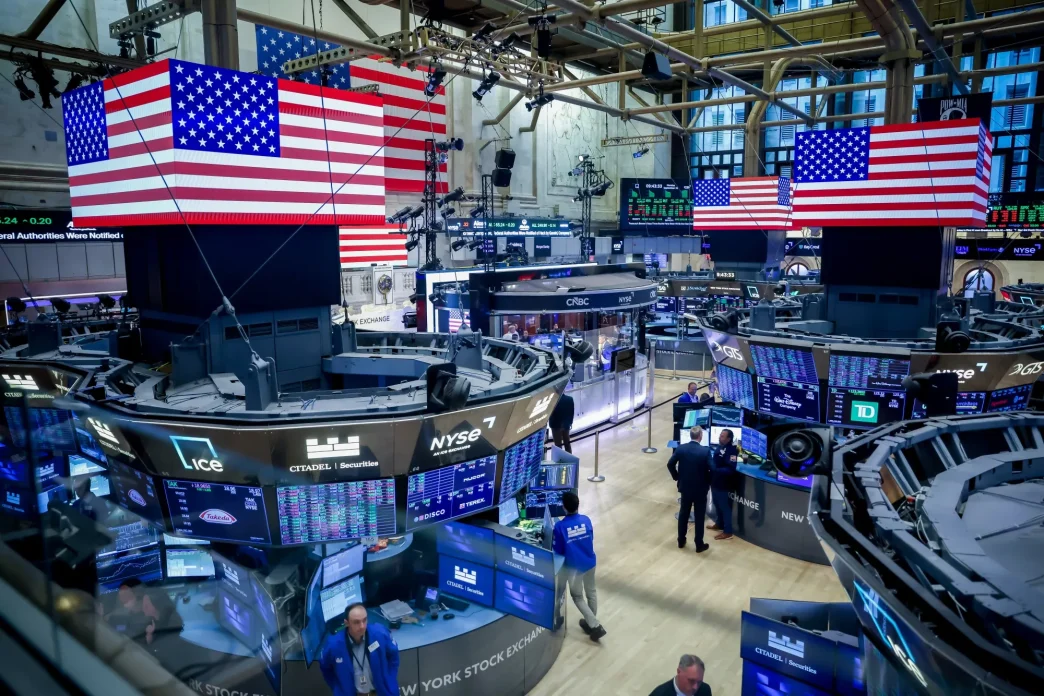
Wall Street’s fixation on artificial intelligence has grown so strong that it’s overriding nearly every other risk in the market, including a bond selloff that’s pushed long-term Treasury yields to levels not seen in decades.
The long bond yield recently climbed to 5.69% and the 10-year rate topped 5.3%, the first time either has reached those levels since 2002. Normally, a move like that would rattle equities, higher yields make future earnings worth less today and raise borrowing costs across the economy. Instead, tech stocks have shrugged it off entirely: the Nasdaq 100 hit a fresh record on Friday and is up 22% this year, while the S&P 500 sits less than 1% away from the all-time high it set in August.
The gains are concentrated in a familiar handful of names. Microsoft, Nvidia and Apple have been the largest point contributors to both the S&P 500’s and the Nasdaq 100’s advances over the past three months, underscoring just how much of this rally rests on a small group of AI-exposed giants rather than the market as a whole.
That concentration makes the upcoming earnings season unusually high-stakes. Investors’ confidence in the rally’s durability largely hinges on sky-high expectations for third-quarter results from the sector, with earnings per share for tech giants expected to jump more than 65% year-over-year. A disappointment from any of the AI bellwethers could expose just how much weight the broader market has been resting on their shoulders.
Treasury Secretary Scott Bessent has moved to calm nerves on both fronts. On the bond selloff, he argued the move isn’t uniquely American: “I would be concerned if we were having some kind of idiosyncratic rise,” he said in an interview with Axios, noting “we’re not seeing people selling treasuries to buy German bonds or Japanese bonds.” He added, “I can’t control the bond market. What I can do is get people to slow down and think.” On fears of an AI-driven bubble, Bessent pointed to the revenue flowing to companies like Anthropic and OpenAI from heavyweight backers including Microsoft, Google and Meta as evidence the spending is generating real returns, not just speculative froth.
For now, the market appears to be taking Bessent’s reassurance at face value, or simply deciding the AI story is too compelling to let bond yields get in the way. Whether that holds through earnings season, when the gap between sky-high expectations and actual results gets tested directly, is the question hanging over the rest of 2026.