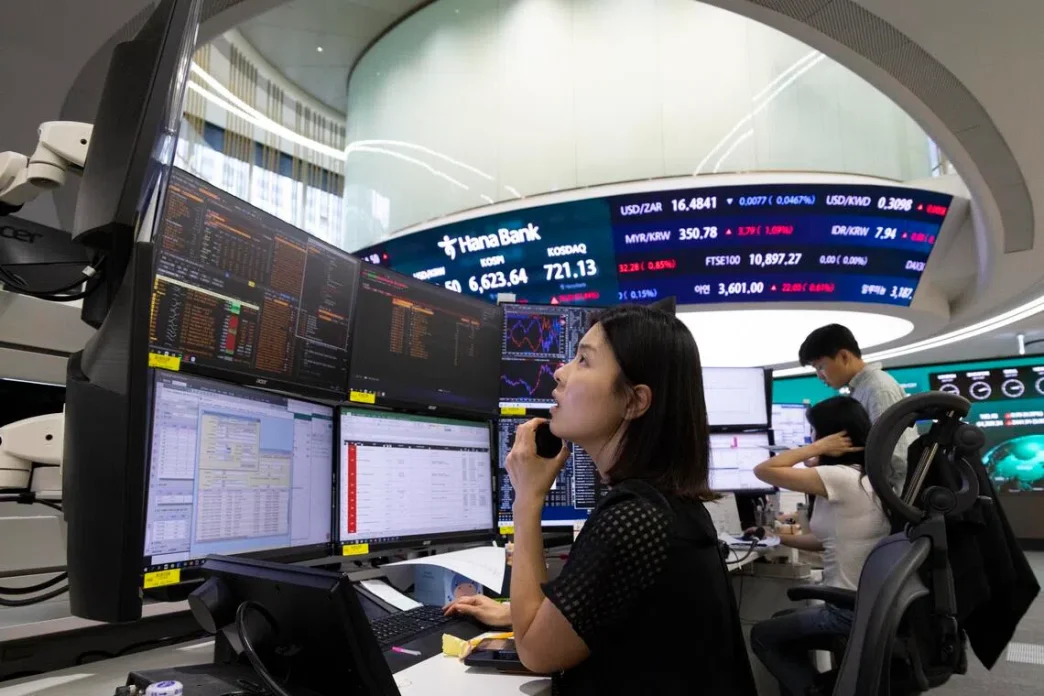
The recent surge in volatility across South Korean markets, which saw the Kospi index experience its most significant intraday swings in months, appears to be settling. This calming trend follows a period where a substantial unwinding of leveraged equity positions, particularly those tied to futures contracts, played a pivotal role in the market’s erratic behavior. Traders and analysts alike are now observing a more stable environment, suggesting that the forced selling, which exacerbated price movements, has largely run its course.
For weeks, the market had been gripped by a dynamic where aggressive bets, often made using borrowed capital, created a fragile ecosystem. When initial price movements went against these positions, margin calls inevitably followed, forcing investors to liquidate holdings to cover their losses. This cascade effect amplified downward pressure, creating a feedback loop that contributed to the heightened volatility. It was a classic example of how leverage, while offering the potential for magnified gains, can also accelerate losses and destabilize market sentiment.
Much of the activity was concentrated in specific sectors, particularly those favored by retail investors who have shown an increasing appetite for high-risk, high-reward strategies. These investors, often utilizing platforms that facilitate easy access to leveraged products, found themselves caught in the sudden downturn. The rapid exits from these positions, driven by mandatory margin calls, contributed significantly to the selling pressure observed on days of sharp declines. This pattern is not entirely new to Korea’s market, which has a history of retail investor influence on certain stock movements.
Market participants are now assessing the extent of the impact these flushed-out positions had on overall market structure. While the immediate pressure has eased, the episode serves as a reminder of the inherent risks associated with high leverage. Regulators in Korea have previously expressed concerns about the proliferation of certain trading strategies among retail investors, and this recent bout of volatility may prompt further scrutiny into the mechanisms that facilitate such significant leveraged exposure. The question remains whether the lesson of this volatility spike will lead to a more cautious approach from market participants in the future.
Despite the recent turbulence, underlying economic indicators for Korea remain a key focus for long-term investors. Export data, manufacturing output, and consumer sentiment continue to be closely monitored for signs of sustained recovery or potential headwinds. The unwinding of leveraged trades, while disruptive in the short term, could ultimately lead to a healthier market environment, as speculative froth is cleared and valuations revert to fundamentals. The path forward for the Kospi will likely depend on a combination of global economic trends and domestic policy responses, rather than solely on the mechanics of futures trading.
The market’s ability to absorb these large-scale liquidations without a more prolonged downturn suggests a degree of resilience beneath the surface. While the memory of sharp intraday swings is still fresh, the current stability offers a cautious optimism. It indicates that the core of the market is beginning to reassert itself, moving beyond the transient effects of leveraged speculation. Investors will now be looking for sustained positive momentum, driven by genuine corporate performance and a clearer economic outlook, rather than the ebb and flow of high-risk trading strategies.