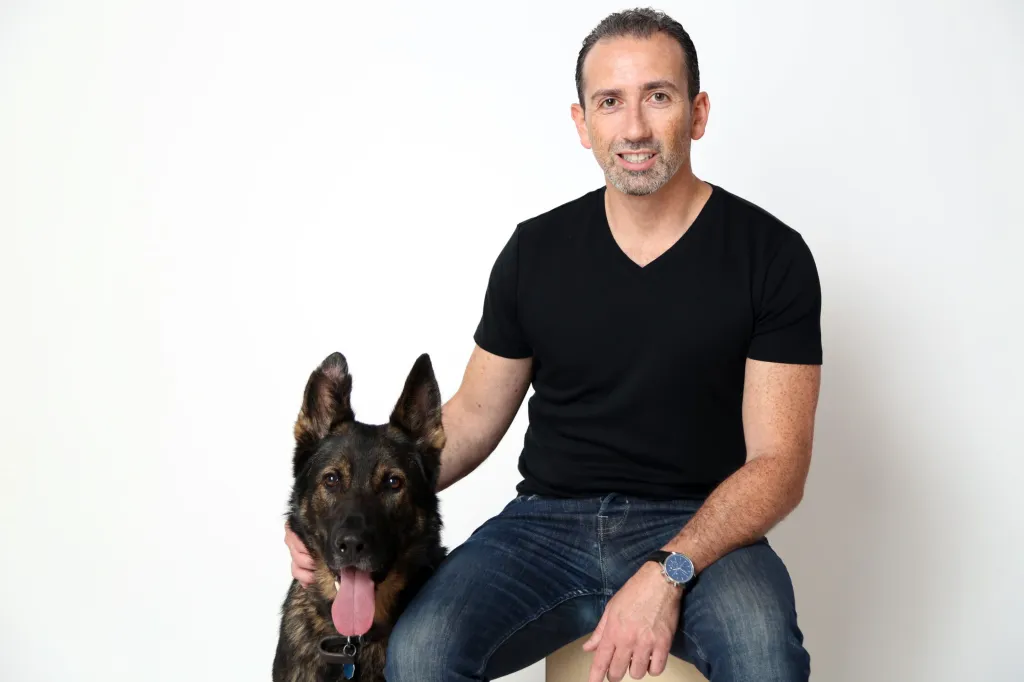
The familiar scenario of a beloved pet disappearing from sight, even for a few heart-stopping minutes, is a common anxiety for dog owners. Jonathan Bensamoun, founder of Fi, experienced this firsthand when his 100-pound German Shepherd, Thor, bolted after deer in the Hamptons. That moment of helplessness, he recounts, became the catalyst for creating Fi, a company focused on real-time pet location and health monitoring. Now, Fi is introducing the Fi Ultra, a device poised to redefine pet tracking by integrating Starlink’s direct-to-cell satellite network.
Until now, every GPS pet tracker on the market, including earlier Fi models and competitors such as Tractive and Garmin, has relied on ground-based LTE cell towers. This reliance creates a fundamental limitation: once a pet ventures beyond the reach of the last tower, tracking capabilities cease. The partnership between Fi and Starlink aims to circumvent this critical hurdle. SpaceX has deployed over 650 satellites designed to function like orbiting cell towers, capable of communicating directly with LTE-enabled devices on the ground. This means a clear line of sight to the sky is all that is required, eliminating the need for specialized hardware or a dish.
Bensamoun emphasizes the transformative nature of this development, noting that the primary constraint for existing tracking products has always been their dependence on the terrestrial LTE network. Starlink, he points out, offers a satellite-based solution that provides what he describes as “omniscient access,” at least within the United States for the immediate future. This technological leap promises a significant expansion of coverage, offering owners a greater sense of security even in remote areas.
The Fi Ultra will retail for $199, alongside Fi’s existing membership fee of $99 every six months. Current subscribers to Fi’s services will only need to purchase the new hardware. A standout feature of the Ultra, consistent with other Fi products, is its extended battery life, capable of lasting up to three months on a single charge. This longevity is further enhanced by machine learning algorithms that conserve power when a dog is at home or asleep, activating full tracking capabilities only when the pet goes missing.
This launch arrives at a pivotal juncture for the pet wearable industry. Tractive, an Austrian rival that achieved $100 million in annual recurring revenue this year, recently acquired Whistle, another pet wearable company, last August. Tractive subsequently discontinued Whistle’s product line, leaving thousands of users without support. In contrast, Fi, which has secured $45 million in total funding with its Series B led by Longview Asset Management, has spent the past year expanding its reach into 38 countries. The introduction of the Fi Ultra positions the company to capitalize on this market disruption with a highly differentiated product. Fi anticipates crossing $100 million in annual recurring revenue this year, underscoring the rapid growth within the sector.
The market for pet wearables is experiencing a robust expansion, projected to reach $3.8 billion by 2026 and an estimated $11.4 billion by 2033. This growth is largely attributed to demographic shifts in the United States, where individuals are having children later in life and consequently investing more significantly in their pets. For Bensamoun, who acquired Thor before starting his own family and admits to enrolling his dog in swimming lessons, this dynamic has always been central to his company’s mission. He articulates his broader goal as an endeavor to erase the inherent compromise between a pet’s freedom and its safety through technological innovation.