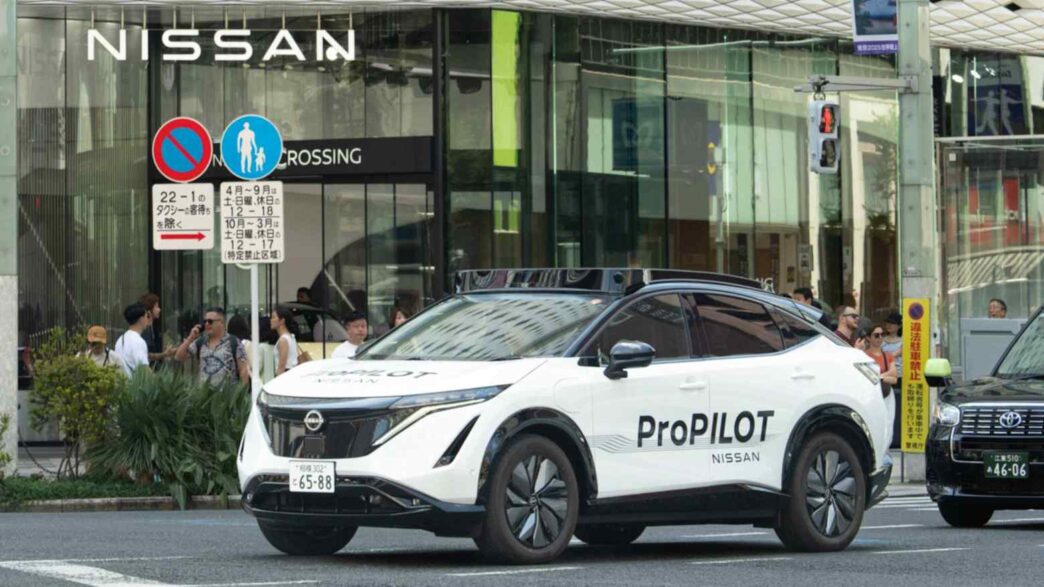
The automotive landscape is on the cusp of another significant shift as Nissan Motor nears a pivotal agreement with Uber Technologies. These discussions, now in their final stages, aim to integrate Nissan’s burgeoning autonomous driving capabilities into Uber’s expansive ride-hailing network on a global scale. Such a partnership could redefine the operational model for both companies, positioning them at the forefront of a driverless transportation future.
Nissan’s ambition in autonomous technology extends beyond current industry benchmarks. The company has been actively developing vehicles capable of transitioning from Level 2 autonomy, which still requires human intervention in certain scenarios, to a fully driverless, Level 5 system. This progression represents a leap from advanced driver assistance to complete vehicle independence, a goal that has eluded many in the sector despite substantial investment. The proposed collaboration would leverage the self-driving vehicles Nissan is developing in conjunction with U.K.-based Wayve Technologies, a move that underscores a multinational effort to accelerate the deployment of this complex technology.
The implications of such a deal resonate across several industries. For Nissan, it offers a direct avenue to deploy its substantial research and development in a real-world, high-volume environment, gathering invaluable data and refining its systems. This direct application bypasses the traditional consumer sales model for autonomous vehicles, instead opting for a service-oriented approach that aligns well with current market trends. Uber, on the other hand, stands to gain a significant advantage in its quest for operational efficiency and reduced labor costs, factors that have historically influenced its profitability. The integration of fully autonomous vehicles could fundamentally alter the economics of ride-hailing, potentially leading to more competitive pricing for consumers and a more stable business model for the company.
Analysts have long pointed to the potential for autonomous technology to disrupt urban mobility. A partnership of this magnitude could serve as a catalyst, pushing widespread adoption forward faster than many anticipated. The challenges, however, remain considerable. Regulatory frameworks around the world are still evolving to accommodate driverless vehicles, and public acceptance, while growing, is not yet universal. Safety, cybersecurity, and the ethical considerations surrounding autonomous decision-making are all areas that demand rigorous attention and continuous improvement.
While the specifics of the financial arrangements and deployment timelines are yet to be fully disclosed, the advanced stage of these talks suggests a clear strategic alignment between Nissan and Uber. Both entities recognize the transformative potential of fully autonomous ride-hailing and appear prepared to invest significant resources to realize that vision. The eventual outcome of these negotiations could set a precedent for how traditional automakers and technology platforms collaborate in the pursuit of a driverless future, marking a crucial chapter in the ongoing evolution of transportation. The global reach of Uber, combined with Nissan’s commitment to Level 5 autonomy, points towards an ambitious undertaking that, if successful, could profoundly reshape urban travel and logistics worldwide.