The Supreme Court’s recent decision regarding the International Emergency Economic Powers Act (IEEPA) has cast a long shadow over the prospect of tariff rebates reaching American households, with Treasury Secretary Scott Bessent expressing significant doubt. A staggering sum, estimated at up to $175 billion, collected under tariffs levied via the IEEPA, now hangs in legal limbo, and the path for these funds to return to consumers appears increasingly improbable. This ruling effectively declared the Oval Office’s use of IEEPA for its sweeping global tariffs unlawful, prompting immediate reevaluation from the administration on how to continue collecting import duties.
Initially, tariffs on China were imposed in February 2025, followed by Canada and Mexico a month later, all under the IEEPA authority. The subsequent “Liberation Day” tariffs in April also fell under this same legal umbrella. While the White House is already exploring alternative legal avenues, such as Section 232, which cites national security, or Section 301, addressing unfair trade practices, the fate of the money already collected remains a contentious issue. Some economists had optimistically suggested that a refund of these funds could act as a significant economic stimulus, particularly if the cash influx reached U.S. importers and subsequently led to lower consumer prices.
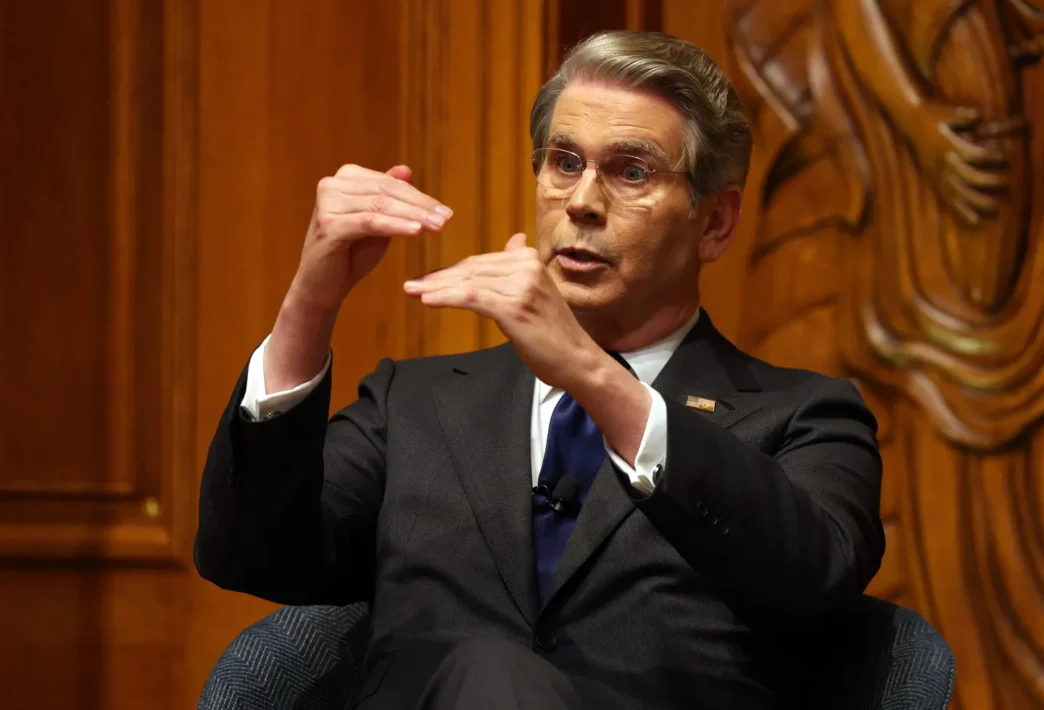
However, Secretary Bessent offered a more grounded perspective during his address at the Economic Club of Dallas. He clarified that the Supreme Court’s ruling did not specify how the IEEPA-generated funds should be disbursed, effectively punting that decision to international trade courts. Bessent candidly remarked that such a process could be “dragged out for weeks, months, years,” tempering any immediate expectations of a resolution. His assessment was stark: “I got a feeling the American people won’t see it.” This sentiment was echoed by U.S. Trade Representative Jamieson Greer, who, in a Fox News Sunday interview, stated that the matter of compensation or refunds was “a matter for the courts,” implying the administration would defer to judicial outcomes.
The precise amount of money at stake, and how much of it could eventually be separated from other customs duties and levies, is still under scrutiny. The Penn Wharton Budget Model at the University of Pennsylvania projects potential refunds reaching $175 billion, reflecting cumulative IEEPA collections of approximately $164.7 billion by January 2026, with an ongoing collection rate of about $500 million per day. This substantial sum, if released, would undoubtedly impact the economy, though its ultimate destination remains uncertain.
UBS chief economist Paul Donovan further dampened hopes that businesses might pass any potential rebates directly to consumers. He informed clients that while tariff rebates would increase the U.S. fiscal deficit and act as a fiscal stimulus, the recipients would be U.S. importers. Given the introduction of new tariffs under different authorities, Donovan found it “unlikely anyone will rush to lower prices to their customers.” Instead, businesses may benefit from a lower effective tariff rate overall.
Following the ruling, the Trump administration confirmed it would enforce a 15% tariff rate under Section 122 of the 1974 Trade Act for a period of 150 days. This temporary measure provides the White House time to establish longer-term mechanisms for duty enforcement. The broader implication of the Supreme Court’s decision, according to analysis from the Yale Budget Lab, is a likely downward trend in the effective tariff rate. Without the IEEPA tariffs, consumers would face an average effective tariff rate of 9.1%, a figure still high since 1946, excluding 2025. This contrasts sharply with the 16.9% effective rate that would have been in place had IEEPA tariffs continued. Deutsche Bank strategist Jim Reid also noted an expectation for the effective tariff rate to fall in 2026, pointing to a decline in average customs duty collected since October, partly attributed to carve-outs and exemptions, and potentially influenced by domestic political considerations.