With his net worth recently surging to an unprecedented $852 billion following the merger of SpaceX and xAI, and an anticipated IPO on the horizon, Elon Musk now possesses more financial resources than anyone in recorded history. Yet, even this monumental sum has not, by his own account, translated into complete personal fulfillment. “Whoever said, ‘Money can’t buy happiness’ really knew what they were talking about,” Musk posted on X, a sentiment that quickly garnered over 96 million views and sparked a wide-ranging discussion among his followers, including other prominent figures from the ultra-wealthy.
Among those who weighed in was hedge fund billionaire Bill Ackman, who offered Musk direct counsel. Ackman suggested that a significant portion of happiness can be derived from aiding others, acknowledging Musk’s existing contributions to millions, with a potential reach to billions. He encouraged Musk to appreciate the extensive impact he has already made. Ackman also touched upon personal relationships, advising Musk, who has fourteen children with four different women, that “Happiness can also be found in a long-term relationship with someone really special. It is time for you to find that someone for the long term.”
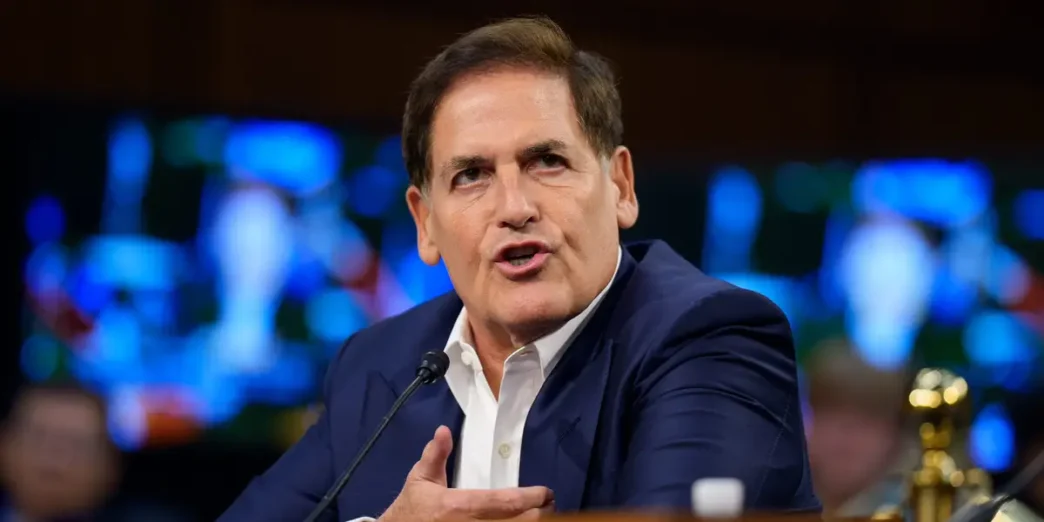
Mark Cuban, the billionaire investor known for his role on Shark Tank, provided a perspective that aligned with Musk’s to a degree, but also introduced a critical distinction. Cuban posits that wealth does not fundamentally alter a person’s baseline happiness so much as it amplifies pre-existing states. His view suggests that if an individual found happiness in less affluent circumstances, they are likely to experience amplified joy when wealthy. Conversely, those who were miserable before acquiring wealth would, in Cuban’s estimation, remain miserable, albeit with the significant alleviation of financial stress.
The enduring question of whether money can secure happiness has long been a subject of academic inquiry. A frequently cited 2010 Princeton University study indicated that daily emotional well-being tended to increase with income, but this upward trend appeared to level off once an individual earned approximately $75,000 annually. More recent research from the University of Pennsylvania’s Wharton School has further refined this understanding. This newer work suggests that overall happiness generally rises with income, but for individuals who are already experiencing unhappiness, the gains in happiness tend to plateau once their annual income reaches around $100,000. Matthew Killingsworth, a lead author from Wharton, summarized these findings by stating that for most people, higher incomes correlate with greater happiness. The primary exception, he noted, involves financially well-off but unhappy individuals, for whom additional money does not appear to improve their state. For everyone else, additional money was associated with varying degrees of increased happiness.
These research findings resonate with Cuban’s observation that money often functions as an amplifier rather than a definitive solution. While financial security can undoubtedly alleviate stress and broaden life choices, it does not inherently resolve complex issues such as strained personal relationships or deeper existential concerns. Despite Ackman’s suggestion that philanthropy might enhance Musk’s happiness, the world’s wealthiest individual has articulated the complexities involved in significant charitable giving. Musk explained on the WTF podcast that while he agrees with the principle of helping humanity, the practical execution of truly beneficial philanthropy is challenging. He noted that it is easy to donate money to merely create the appearance of goodness, but genuinely impactful giving is considerably more difficult.
Musk is not alone in navigating these philanthropic tensions. Many tech leaders, including Mark Zuckerberg, Larry Ellison, and Musk himself, have signed the Giving Pledge, an initiative spearheaded by Bill Gates, Melinda French Gates, and Warren Buffett, committing to donate a majority of their wealth to charitable causes. However, critics have pointed out that many signatories have been slow to fulfill these commitments. Peter Thiel, another prominent billionaire investor, reportedly advised Musk against the pledge, suggesting that Gates might direct funds towards “left-wing nonprofits.” Gates, for his part, has offered a candid perspective on the advantages and limitations of extreme wealth. During a 2019 Reddit Q&A, he affirmed that being a billionaire made him happier than being middle-class, primarily due to the freedom from worrying about healthcare or college costs. However, he also emphasized that one does not need a billion dollars to achieve that sense of financial security, advocating for broader efforts to reduce such cost burdens.