
Despite recent diplomatic friction, a significant surge in hotel reservations by Chinese tourists for Japan’s upcoming Lunar New Year holiday signals a persistent demand for travel to the island nation. Industry data reveals a robust booking trend for the festive period in February, even as Beijing has issued advisories to its citizens regarding travel to Japan. This pattern suggests that individual travel aspirations might be largely decoupled from broader geopolitical tensions.
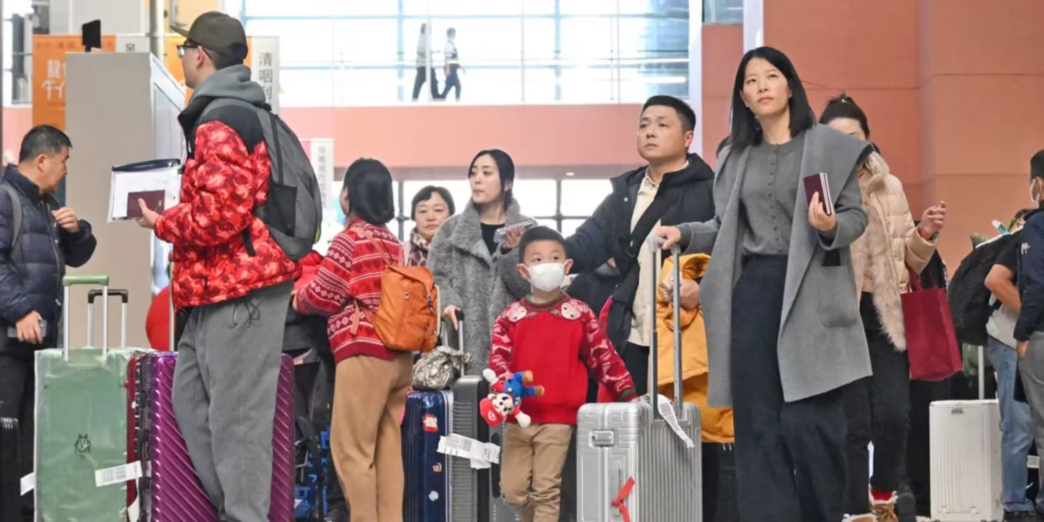
The Kansai International Airport in Osaka, a major gateway for international travelers, is anticipated to see a considerable influx of Chinese visitors at the onset of the Lunar New Year celebrations in 2025. This expected arrival underscores the continued allure of Japanese destinations, from its bustling cities to its cultural landmarks, for Chinese vacationers. The sheer volume of reservations points to a resilience in cross-border tourism that often transcends political narratives.
For many Chinese families, the Lunar New Year holiday represents a prime opportunity for international travel, a chance to explore new cultures and experiences. Japan, with its relatively short flight times, diverse attractions, and reputation for hospitality, has long been a favored destination. The current booking figures indicate that this preference remains strong, even when official communications might suggest a more cautious approach.
The economic implications for Japan’s tourism sector are substantial. Chinese tourists represent a critical segment, known for their significant spending on accommodation, shopping, dining, and attractions. A robust return of these visitors during a key holiday period could provide a welcome boost to an industry still navigating the complexities of global travel. Local businesses, from luxury retailers in Ginza to traditional inns in Kyoto, are likely preparing for this anticipated surge.
This phenomenon is not entirely unprecedented. Throughout history, personal connections and economic ties have often continued to flourish even when state-level relations face challenges. The act of choosing a travel destination is a deeply personal one, influenced by a myriad of factors including perceived safety, value, and cultural interest, rather than solely by official government statements.
Observing the flow of travelers like those arriving at Kansai International Airport offers a tangible metric for understanding the nuanced relationship between nations. While diplomatic discussions continue on official channels, the movement of people and the choices they make about where to spend their holidays paint a different, perhaps more optimistic, picture of cross-cultural engagement. The upcoming Lunar New Year will undoubtedly provide further insights into these evolving dynamics.